


CBN vs CBG: What Does Research Say About Each?

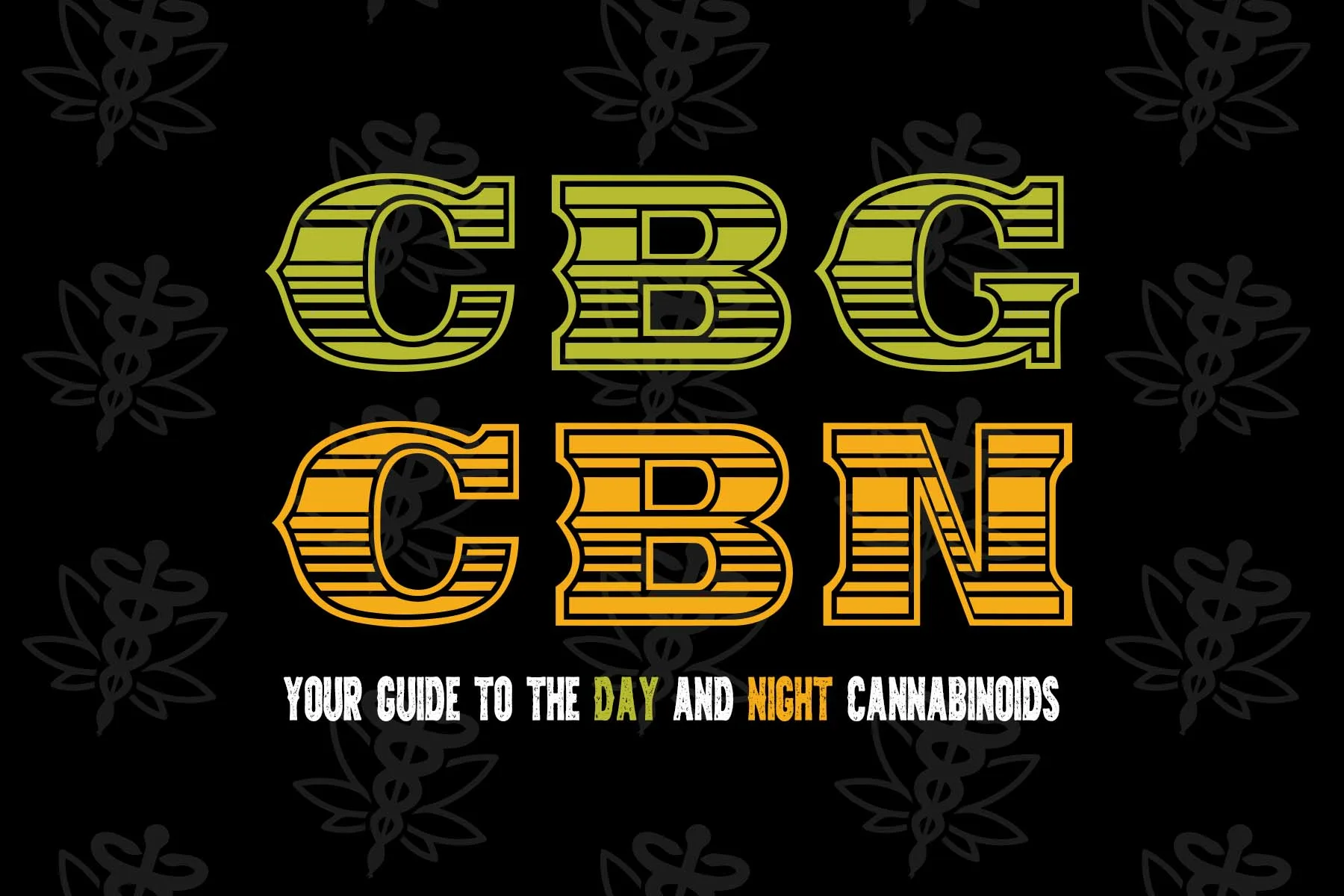
Most people know CBD and THC, but CBN and CBG are two minor cannabinoids that attract growing scientific interest. People sometimes call them the “day” and “night” cannabinoids — a popular reference to how researchers describe their different properties. But what are CBN and CBG, how do they form, and what does science explore in relation to each one?
CBN vs CBG: A Quick Comparison
CBN and CBG both belong to the minor cannabinoid family — compounds that appear in smaller amounts than THC or CBD. They differ significantly in how they form, where they appear in the plant, and what researchers study in relation to each one.
- CBN (Cannabinol): Forms when THC breaks down over time. More common in aged cannabis. Science describes it as mildly psychoactive but far weaker than THC. Researchers often study it in relation to sleep and neurological processes.
- CBG (Cannabigerol): The plant makes CBG directly. It serves as the chemical starting point for other cannabinoids including THC and CBD. Science classes it as non-intoxicating. Researchers study it in relation to inflammation, eye pressure, and bacterial models.
What Is CBN (Cannabinol)?
CBN stands for cannabinol. It is one of more than 100 naturally occurring cannabinoids found in the cannabis plant. Unlike most cannabinoids, the plant does not make CBN directly. CBN forms when THC breaks down through exposure to heat, light, and oxygen over time. This is why aged cannabis material tends to contain higher levels of CBN than fresh plant material.
Scientific literature generally describes CBN as non-intoxicating or only very mildly psychoactive — significantly weaker than THC. Standard CBN products do not cause mind-altering effects. Researchers study CBN to understand its chemical properties and how it interacts with biological systems.
Why Do People Call CBN the “Night” Cannabinoid?
CBN’s association with nighttime comes from historical observations linking aged cannabis to feelings of drowsiness. Because CBN forms as THC degrades, older cannabis material — which contains more CBN — was often associated with more relaxing effects. This gave rise to the “night cannabinoid” label. Current clinical evidence on CBN and sleep remains limited, and the “night” label is a cultural reference more than a confirmed scientific property.
What Do Researchers Study in Relation to CBN?
Early-stage research explores CBN in several experimental contexts:
- Sleep-related models — though current human evidence remains limited and inconclusive
- Neurological processes and nervous system pathways in animal models
- Inflammation-related mechanisms in lab settings
- Appetite and feeding behaviour in animal studies
- Bacterial models and cellular interactions in laboratory conditions
What Is CBG (Cannabigerol)?
CBG stands for cannabigerol. Like CBN, it is a minor cannabinoid — present in small amounts in the plant. But unlike CBN, CBG is not a breakdown product. The plant makes CBG directly through its own production process. CBG is non-intoxicating and does not cause a high. Most cannabis plants produce very little CBG, though some varieties are bred specifically to produce higher amounts.
CBG: The “Mother of All Cannabinoids”
Researchers call CBG the “mother of all cannabinoids” because it serves as the chemical starting point for other cannabinoids. CBGA — the acidic form of CBG — is the precursor from which the plant produces THCA, CBDA, and CBCA. As the plant grows and absorbs light, enzymes convert CBGA into these other compounds. Whatever CBGA remains then becomes CBG. This unique role in the plant’s chemistry makes CBG a fascinating subject for researchers studying how cannabinoids form and interact.
Why Do People Call CBG the “Day” Cannabinoid?
CBG earns the “day” label mainly because it does not share the drowsiness associations that CBN carries. Scientific literature does not describe CBG as sedative. Some user surveys report feeling more alert when using CBG-dominant products, though these reports are observational rather than clinically confirmed.
What Do Researchers Study in Relation to CBG?
CBG appears in several active areas of cannabinoid research:
- Inflammation-related pathways in laboratory and animal models
- Bacterial interactions and cellular mechanisms in lab settings
- Ocular pressure models — cannabinoids including CBG have been studied in relation to eye pressure in animal research
- Anxiety-related models in early observational and survey research
- Neurological and neuroprotective processes in early-stage studies
CBN vs CBG: Key Differences Explained
How They Form
CBG forms directly in the plant as a primary compound. CBN only appears after THC breaks down over time. This makes their origins fundamentally different and explains why CBG shows up in young plant material while CBN concentrations rise in aged cannabis.
Psychoactivity
Both CBN and CBG are non-intoxicating at standard amounts. Science classes CBG as fully non-psychoactive. CBN appears as very mildly psychoactive in some literature, but far weaker than THC. Neither compound causes the intoxicating effects associated with THC.
Research Focus
CBN research leans toward sleep models and neurological processes. CBG research focuses more on inflammation, bacterial interactions, and ocular pressure models. Both remain at an early and exploratory stage compared to the volume of research behind CBD.
Amount in the Plant
CBG appears in very small amounts in most mature cannabis plants — typically under 1%. CBN also appears in small amounts, with concentrations rising as the plant ages and THC degrades naturally over time.
Do CBN and CBG Work Together?
Researchers often study cannabinoids together rather than in isolation. Scientists look at how multiple cannabinoids interact within biological systems — a concept commonly known as the entourage effect. CBN and CBG both appear in full-spectrum hemp products alongside CBD and other minor cannabinoids. Neither replaces the other — they interact with different pathways and play different roles within the plant’s overall cannabinoid profile.
Frequently Asked Questions About CBN and CBG
What is the main difference between CBN and CBG?
The biggest difference is how they form. CBG is a primary cannabinoid the plant makes directly. CBN forms only after THC breaks down over time. They also sit in different research contexts — CBN mainly in sleep and neurological studies, CBG in inflammation and bacterial research.
Are CBN and CBG psychoactive?
Neither compound causes intoxication at standard amounts. Science classes CBG as fully non-psychoactive. CBN is described as very mildly psychoactive in some research, but far weaker than THC. Standard CBN and CBG products do not cause mind-altering effects.
Why is CBG called the mother of all cannabinoids?
CBGA — the acidic precursor of CBG — is the starting point from which the plant produces other cannabinoids including THC and CBD. This sits CBG at the root of the plant’s entire cannabinoid production process, which is why the name has stuck.
Is there research on CBN and sleep?
Some early studies and observational research explore CBN in relation to sleep. Current clinical evidence remains limited and inconclusive, particularly in humans. The sleep association comes largely from historical anecdote, and researchers continue to call for more rigorous clinical studies.
Do CBN and CBG appear in full-spectrum products?
Yes. Full-spectrum hemp products contain the full range of cannabinoids the plant produces, including trace amounts of CBN and CBG alongside CBD and others. Concentrations of both are typically low in standard full-spectrum formulations.
Conclusion
CBN and CBG are two distinct minor cannabinoids with different origins, different chemical roles in the plant, and different research profiles. CBN forms through THC breakdown and draws research interest in sleep and neurological models. CBG forms directly in the plant and features in research on inflammation, bacterial activity, and ocular pressure.
The “day and night” framing is a popular cultural reference that captures some real differences in research focus — even if science has not formally confirmed those labels. Both cannabinoids remain active and evolving areas of study within cannabinoid science.
References
- Nachnani R, et al. (2021). The pharmacological case for cannabigerol. Journal of Pharmacology and Experimental Therapeutics, 376(2), 204–212. PubMed ↗
- Taguchi K, et al. (2022). Neurological effects of cannabis and cannabinoids: review of current research. Frontiers in Pharmacology. PubMed ↗
- Appendino G, et al. (2011). Antibacterial cannabinoids from Cannabis sativa. Journal of Natural Products, 71(8), 1427–1430. PubMed ↗
- Corroon J, et al. (2021). Cannabigerol: a narrative review of the preclinical literature. Cannabis and Cannabinoid Research. PubMed ↗
- Kaplan BL, et al. (2021). A survey of medical cannabis users. Cannabis and Cannabinoid Research, 6(1), 12–18. PubMed ↗
Disclaimer: This blog is for informational and educational purposes only. We review and reference available studies and reputable sources; however, content may not reflect the most current research or regulations and should not be taken as medical, legal, or professional advice. We do not make or imply health claims. Products mentioned are not intended to diagnose, treat, cure, or prevent any disease and statements have not been evaluated by EFSA or the FDA. Effects can vary between individuals. Always consult a qualified healthcare professional before use and verify that any product or ingredient is lawful in your jurisdiction.