


Cannabis and Anxiety: What the Research Shows

Anxiety affects millions of people across Europe and worldwide. It can be mild or severe, occasional or daily. For some people, it becomes a long-term condition that gets in the way of everyday life.
Many people are curious about natural ways to support their mental wellbeing. One area drawing growing interest is cannabis and anxiety. In particular, researchers are looking at how cannabinoids like CBD and CBG interact with the body’s systems that manage stress and mood.
This article looks at what the current research shows — and what it does not yet tell us. It is not medical advice. If you live with anxiety, please speak to a qualified healthcare professional.
What Is Anxiety?
Anxiety is a feeling of worry, fear, or unease. It is a normal human response to stress. However, when anxiety becomes frequent or intense, it can affect daily life.
The World Health Organization (WHO) estimates that anxiety disorders affect around 301 million people globally. They are among the most common mental health conditions in the world.
Common signs of anxiety include:
- Persistent feelings of worry or dread
- A racing heart or tightness in the chest
- Difficulty sleeping
- Trouble concentrating
- Feeling tense or on edge
Anxiety is treatable. However, many people do not seek help. If you think you may have an anxiety disorder, talking to a doctor or therapist is a good first step.
How the Body Manages Stress: The Endocannabinoid System
To understand why researchers study cannabis and anxiety, it helps to know about the endocannabinoid system (ECS). The ECS is a network of receptors and signals found throughout the body. It plays a key role in regulating mood, sleep, and stress responses.
The body makes its own cannabinoids — called endocannabinoids — that work with this system. Plant cannabinoids like CBD and CBG can also interact with some of the same receptors. This is why scientists are interested in how they might affect anxiety and stress.
However, understanding exactly how this works in humans is still an active area of research. We do not yet have enough data to draw firm conclusions.
What Does the Research Say About CBD and Anxiety?
CBD is the most studied cannabinoid for anxiety. Several studies have looked at how it might interact with stress-related systems in the body.
For example, one study found that people with social anxiety disorder who took CBD before a public speaking task reported lower levels of anxiety than those who took a placebo. Another study looked at CBD and sleep in people with anxiety. Participants reported better sleep and lower anxiety scores over the first month.
A 2015 review in the journal Neurotherapeutics looked at existing research on CBD and anxiety disorders. The authors found early evidence that CBD may have potential across several anxiety-related conditions. But they also noted that most studies were small and short-term. Larger human trials were needed.
So while the early findings are interesting, they are not yet strong enough to support clinical recommendations. CBD is not an approved treatment for anxiety.
What About CBG and CBN?
CBG and CBN are two other cannabinoids that some researchers study in the context of stress and mood.
CBG, in particular, has attracted interest because of its potential calming properties in early lab research. However, human studies on CBG and anxiety are very limited right now. Most data comes from surveys and animal studies.
A survey of people using CBG-rich cannabis products found that many reported reduced anxiety. But survey data has clear limits — it relies on self-reporting and has no control group. So these results need proper clinical trials to back them up.
CBN research is even earlier in its development. We simply do not have enough data yet to say much about its role in managing anxiety.
A Note on THC and Anxiety
Not all cannabinoids work the same way. THC — the compound in cannabis that produces a high — can actually increase anxiety in some people. Higher doses in particular are linked to feelings of paranoia and unease.
Because of this, most research on cannabis for anxiety focuses on non-intoxicating cannabinoids like CBD and CBG. Products with high THC content are not generally considered suitable for anxiety management. In fact, for some people, they may make things worse.
Canna Health Amsterdam Products Worth Exploring
If you are interested in exploring cannabinoid products as part of your broader wellness routine, here are three options from Canna Health Amsterdam. These are not medicines and are not intended to treat anxiety.
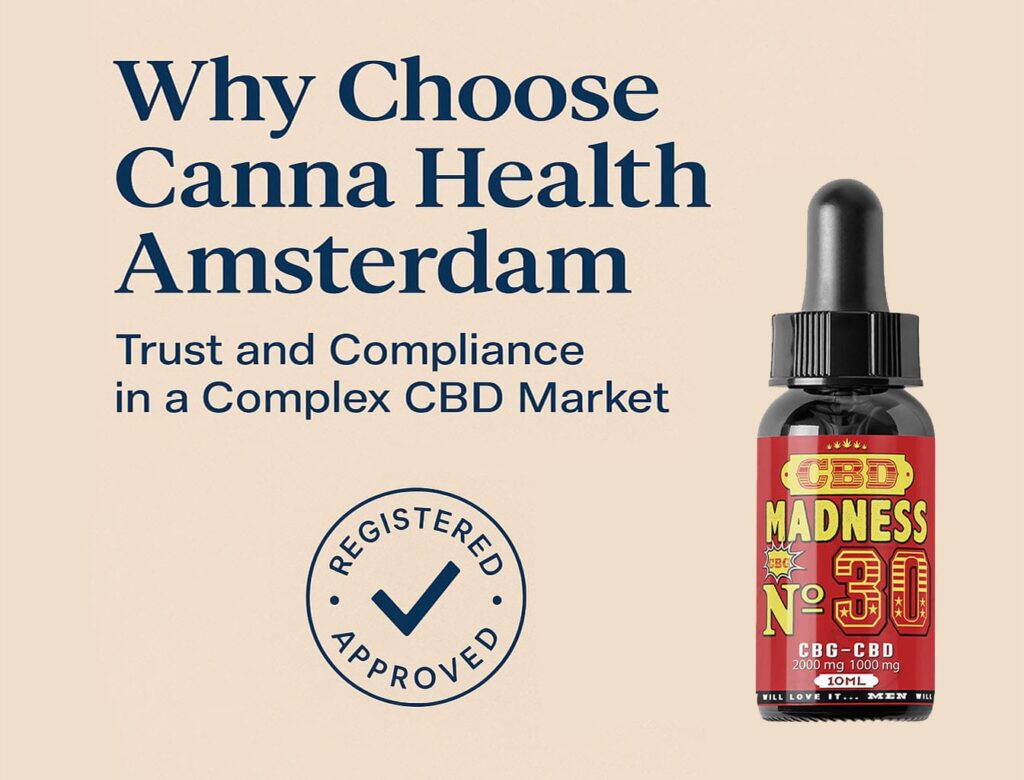
1. 15% Full Spectrum CBD CBG Oil — A full-spectrum oil combining CBD and CBG. Full-spectrum products contain a range of cannabinoids that may work together. Easy to use with consistent dosing. Take a few drops under the tongue.
2. CBD CBG Massage Oil with Argan Oil, Camphor and Mint — A topical oil combining CBD and CBG with argan oil, camphor, and mint. Apply to the neck and shoulders as part of a relaxation routine.
3. CBD Gummies — Available in banana and watermelon flavours. A simple, consistent way to take CBD daily. No measuring required.
Always speak to your doctor before adding any cannabinoid product to your routine — especially if you take prescription medication.
Conclusion
Interest in cannabis and anxiety is growing. Early research on CBD suggests it may interact with the body’s stress and mood systems in ways that are worth studying further.
However, the evidence is still at an early stage. CBD is not an approved treatment for anxiety. CBG and CBN research is even more limited. None of these products should replace professional mental health support.
If you live with anxiety, the most important step is to talk to someone — a doctor, therapist, or trusted person in your life. Cannabinoid products may be something to discuss with your healthcare provider as part of a broader approach to wellbeing.
References
- World Health Organization. (2023). Mental disorders fact sheet. WHO. [Global prevalence data for anxiety disorders.] Source ↗
- Bergamaschi MM, et al. (2011). Cannabidiol reduces the anxiety induced by simulated public speaking in treatment-naive social phobia patients. Neuropsychopharmacology, 36(6), 1219–1226. Journal ↗
- Shannon S, et al. (2019). Cannabidiol in anxiety and sleep: a large case series. The Permanente Journal, 23, 18–041. Journal ↗
- Blessing EM, et al. (2015). Cannabidiol as a potential treatment for anxiety disorders. Neurotherapeutics, 12(4), 825–836. Journal ↗
- Patel M, et al. (2021). Survey of patients employing cannabigerol-predominant cannabis preparations: perceived medical effects, outcomes, and reasons for use. Cannabis and Cannabinoid Research, 7(5), 706–716. Journal ↗
Frequently Asked Questions: Cannabis and Anxiety
Can cannabis treat anxiety?
No cannabinoid product is an approved treatment for anxiety. However, researchers are studying how compounds like CBD interact with the body’s stress and mood systems. Some early studies show promising results. But the evidence is not yet strong enough to support clinical use. If you live with anxiety, speak to a doctor or therapist about your options.
Does CBD help with anxiety?
Some studies suggest that CBD may interact with anxiety-related pathways in the body. For example, one study found that people with social anxiety reported lower stress levels after taking CBD before a public speaking task. However, most studies are small and short-term. CBD is not an approved medicine for anxiety. Always consult a healthcare professional before using CBD for any health-related purpose.
Is THC good or bad for anxiety?
THC can affect people differently. In some cases, especially at higher doses, THC is linked to increased feelings of anxiety and paranoia. Because of this, most research on cannabis and anxiety focuses on non-intoxicating cannabinoids like CBD and CBG rather than THC. If you are prone to anxiety, high-THC products are generally not recommended.
What is the endocannabinoid system and why does it matter for anxiety?
The endocannabinoid system (ECS) is a network of receptors found throughout the body. It plays a role in regulating mood, sleep, and how the body responds to stress. The body makes its own cannabinoids that work with this system. Plant cannabinoids like CBD can also interact with some of the same receptors. This is why researchers study cannabinoids in the context of anxiety and stress. However, research into exactly how this works in humans is still ongoing.
Disclaimer: This blog is for informational and educational purposes only. We review and reference available studies and reputable sources; however, content may not reflect the most current research or regulations and should not be taken as medical, legal, or professional advice. We do not make or imply health claims. Products mentioned are not intended to diagnose, treat, cure, or prevent any disease and statements have not been evaluated by EFSA or the FDA. Effects can vary between individuals. Always consult a qualified healthcare professional before use and verify that any product or ingredient is lawful in your jurisdiction.