



What Are Alkaloids? A Closer Look at Kanna’s Active Compounds

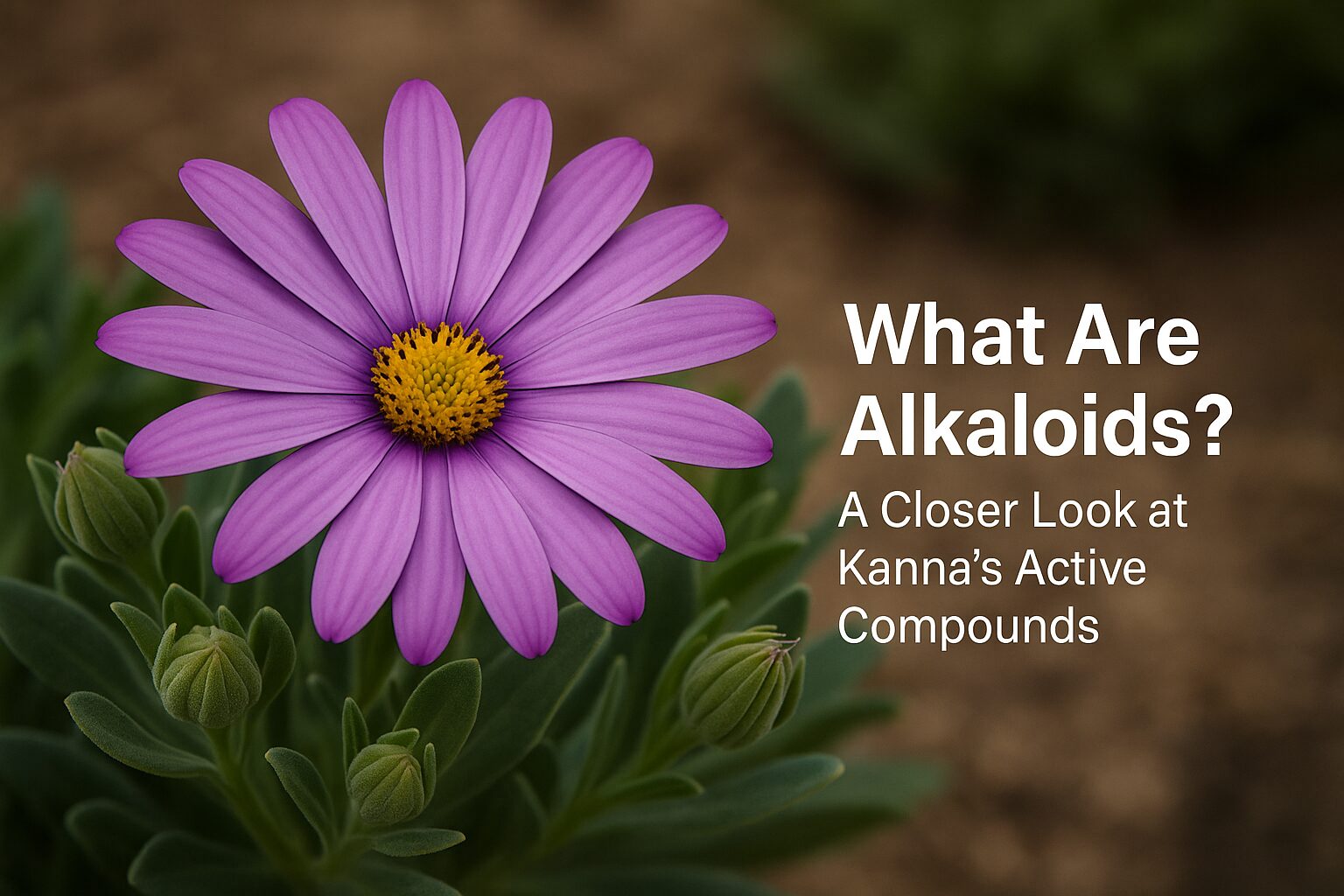
Alkaloids are naturally occurring compounds found in many plants. They contain nitrogen and tend to have strong effects on the body, even in small amounts. Some of the most well-known alkaloids include caffeine, morphine, and nicotine — all very different compounds, but all belonging to the same chemical family.
In the case of kanna (Sceletium tortuosum), the active compounds are a specific group called mesembrine-type alkaloids. These are what researchers study when they investigate kanna’s effects on mood, stress, and cognitive function.
This article explains what these alkaloids are, how they interact with the body’s systems, and what the current research shows. It does not make claims about what kanna products will do for you — individual responses vary significantly, and kanna is not an approved medicine.
What Are Alkaloids?
Alkaloids are a large and chemically diverse group of natural compounds. Plants produce them as part of their own biochemistry — often as a defence mechanism against insects and animals. However, many alkaloids also interact powerfully with human physiology, which is why they have attracted so much scientific and medical interest.
Caffeine, for example, is an alkaloid that blocks adenosine receptors in the brain, delaying the feeling of tiredness. Morphine is an alkaloid that binds to opioid receptors, blocking pain signals. Nicotine is an alkaloid that activates acetylcholine receptors, producing stimulation.
So alkaloids are not a single thing with a single effect. Instead, they are a broad chemical category. What makes them interesting is that each one has a specific way of interacting with the body — and understanding that mechanism helps researchers and consumers make more informed decisions about them.
Kanna’s Key Alkaloids: Mesembrine and Mesembrenone
Kanna contains several alkaloids, but two attract the most research attention: mesembrine and mesembrenone. Together, they account for most of the pharmacological interest in this plant.
Mesembrine
Mesembrine is the most studied alkaloid in kanna. Researchers classify it as a serotonin reuptake inhibitor (SRI) — meaning it slows the process by which the brain reabsorbs serotonin after it has been used to carry signals between neurons.
Serotonin plays a role in regulating mood, emotional responses, and stress. Because of this, the serotonin system is a major target for psychiatric medications. SSRIs — selective serotonin reuptake inhibitors — work through a similar mechanism to mesembrine, although they are pharmaceutical compounds developed through clinical drug development, not plant alkaloids.
It is important to be clear here: mesembrine and SSRIs are not the same thing. SSRIs are prescription medicines with extensive clinical trial data behind them. Mesembrine is a plant alkaloid with a much smaller body of human research. Comparing them in mechanism does not mean comparing them in effect, safety, or clinical value.
⚠️ Important: Because mesembrine affects the serotonin system, people who take SSRIs, SNRIs, MAOIs, or any other serotonin-affecting medication must speak to a doctor before using kanna. Combining serotonin-affecting compounds without medical supervision carries a risk of serotonin syndrome — a potentially serious condition. This applies to all kanna products, regardless of format or dose.
Mesembrenone
Mesembrenone is the second major alkaloid in kanna. Like mesembrine, it influences the serotonin system. However, it also inhibits an enzyme called phosphodiesterase 4 — commonly written as PDE4.
PDE4 plays a role in intracellular signalling, particularly in processes linked to inflammation and cognitive function. When PDE4 is inhibited, levels of a molecule called cyclic AMP (cAMP) rise. Researchers study cAMP in the context of learning, memory, and neural resilience.
Because of this dual action — serotonin reuptake inhibition plus PDE4 inhibition — mesembrenone attracts particular interest from researchers studying both mood and cognitive function. However, most of this research is preclinical or based on small human trials. So the findings are promising rather than conclusive.
What Does the Research Currently Show?
The human research on kanna alkaloids is still limited. However, a few studies give a useful starting point.
A 2013 clinical trial by Harvey et al. studied a standardised kanna extract (Zembrin) in healthy adult volunteers. The researchers found that participants showed improved performance on tests measuring cognitive flexibility and executive function. The authors linked this to PDE4 inhibition by mesembrenone.
A separate study by Terburg et al. (2013) looked at how the same extract affected the amygdala — the part of the brain involved in threat detection and stress responses. Using fMRI brain imaging, the researchers found reduced amygdala reactivity in participants who took the extract, compared to those who took a placebo. However, this was a small study and the findings need replication in larger trials.
Earlier pharmacological work by Smith et al. (1996) confirmed mesembrine’s affinity for the serotonin transporter — establishing the biochemical basis for its classification as a serotonin reuptake inhibitor.
In short: the early research on kanna alkaloids is interesting and the mechanisms are scientifically plausible. But the human clinical evidence is still small in scale. Kanna is not an approved treatment for any condition, and it should not replace prescribed medication or professional medical advice.
Why Kanna’s Alkaloid Profile Is Unusual
What makes kanna stand out among botanical supplements is the combination of these two mechanisms in a single plant. Most well-studied mood-supporting botanicals work through one primary pathway. Kanna’s alkaloids work through two — serotonin reuptake inhibition and PDE4 inhibition — which is relatively rare.
Because of this, researchers find kanna interesting as a subject of study. However, it also means users should approach it with more awareness than they might a simpler supplement. Two active mechanisms means two potential interaction points with medications and other compounds.
For most healthy adults not taking serotonin-affecting medications, kanna is considered a low-risk botanical with a long history of traditional use. But as always, the starting point is understanding what you are taking and why.
Kanna Products at Canna Health Amsterdam
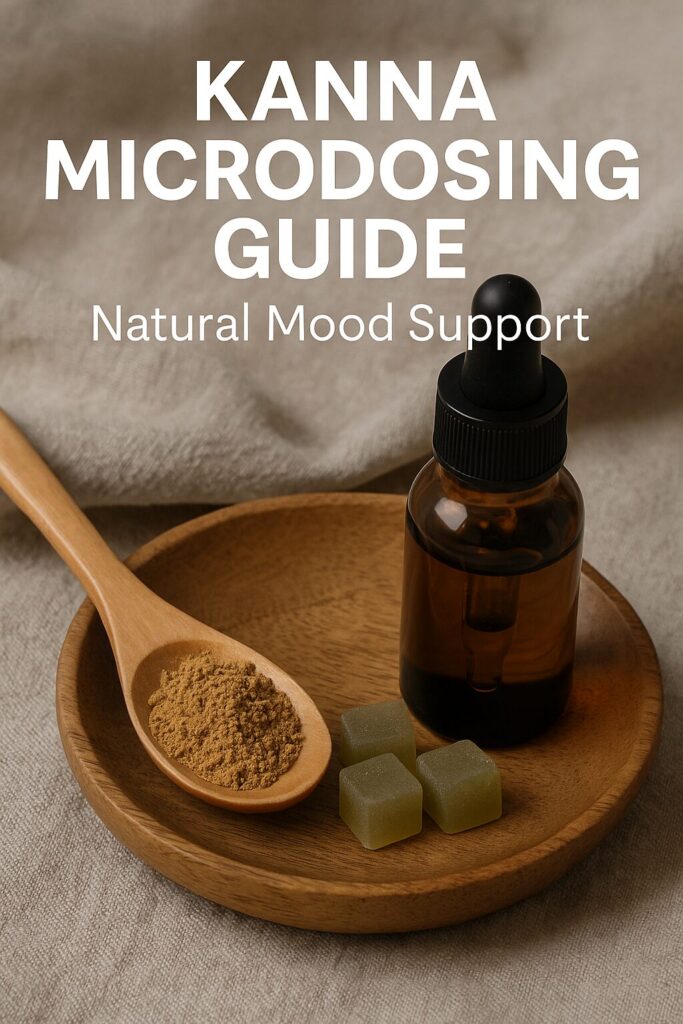
If you want to explore kanna, Canna Health Amsterdam stocks Kanna Gummies — Cherry Flavour — 25 mg kanna extract per gummy. Each gummy contains a consistent, pre-measured amount of kanna extract. They are vegan and independently lab-tested.
These are food supplements, not medicines. They are not intended to treat, diagnose, cure, or prevent any condition. If you take any medication — especially SSRIs, SNRIs, or MAOIs — speak to a doctor before using this product.
Final Thoughts
Kanna’s effects come from its alkaloids — primarily mesembrine and mesembrenone. Both interact with the serotonin system. Mesembrenone also inhibits PDE4, which researchers link to cognitive function.
The science is early but the mechanisms are well-understood at a biochemical level. Human trials are small so far, but the results have been interesting enough to sustain growing research interest.
However, because kanna affects the serotonin system, it is not a supplement to take carelessly — especially alongside medication. Understanding the alkaloids behind it is the first step to using it responsibly.
References
- Smith MT, et al. (1996). Psychoactive constituents of the herbs Sceletium tortuosum N.E.Br. and other Sceletium species. Life Sciences, 15, 1209–1216. [Establishes mesembrine’s affinity for the serotonin transporter.] Journal ↗
- Brendler T, et al. (2010). Phytochemistry and pharmacology of Sceletium tortuosum. Journal of Ethnopharmacology, 137(3), 1124–1129. Journal ↗
- Harvey AL, et al. (2011). Pharmacological actions of the South African medicinal and functional food plant Sceletium tortuosum and its principal alkaloids. Journal of Ethnopharmacology, 137(3), 1124–1129. Journal ↗
- Terburg D, et al. (2013). Acute effects of Sceletium tortuosum (Zembrin), a dual 5-HT reuptake and PDE4 inhibitor, in the human amygdala and its connection to the hypothalamus. Neuropsychopharmacology, 38(13), 2708–2716. Journal ↗
- Chiu S, et al. (2014). Proof-of-concept randomized controlled study of cognition effects of the proprietary extract Sceletium tortuosum (Zembrin) targeting phosphodiesterase-4 in cognitively healthy subjects. Evidence-Based Complementary and Alternative Medicine, 2014, 682014. Journal ↗
Frequently Asked Questions: Kanna Alkaloids
What are the active alkaloids in kanna?
The two main active alkaloids in kanna (Sceletium tortuosum) are mesembrine and mesembrenone. Mesembrine is a serotonin reuptake inhibitor — it slows the reabsorption of serotonin in the brain. Mesembrenone also affects the serotonin system but additionally inhibits an enzyme called phosphodiesterase 4 (PDE4), which plays a role in cognitive signalling and inflammation. Both alkaloids are the subject of ongoing scientific research.
Is mesembrine the same as an SSRI antidepressant?
No — mesembrine and SSRIs work through a similar mechanism (serotonin reuptake inhibition) but they are not the same thing. SSRIs are pharmaceutical medicines with extensive clinical trial data, regulatory approval, and prescribed dosing. Mesembrine is a plant alkaloid with a much smaller body of human research. Saying they share a mechanism does not mean they are equivalent in effect, safety profile, or clinical value. Because of the shared mechanism, however, people who take SSRIs or other serotonin-affecting medications must speak to a doctor before using kanna.
What does PDE4 inhibition mean for kanna users?
PDE4 (phosphodiesterase 4) is an enzyme involved in intracellular signalling. When PDE4 is inhibited, levels of a molecule called cyclic AMP (cAMP) rise. Researchers study cAMP in the context of learning, memory consolidation, and neural function. Because mesembrenone inhibits PDE4, some researchers study kanna in the context of cognitive function. Early clinical trials suggest possible effects on attention and cognitive flexibility, but this research is still small in scale and needs further replication.
Can I take kanna if I am on antidepressants?
No — not without speaking to a doctor first. Kanna contains mesembrine, which affects serotonin reuptake. Combining this with SSRIs, SNRIs, MAOIs, or other serotonin-affecting medications could increase serotonin activity to unsafe levels, a condition called serotonin syndrome. This is a serious medical risk. Even at low doses of kanna, the combination with serotonin-affecting medication is not safe without medical supervision. Always consult your doctor or pharmacist before adding kanna to your routine if you take any prescription medication.
Disclaimer: This blog is for informational and educational purposes only. We review and reference available studies and reputable sources; however, content may not reflect the most current research or regulations and should not be taken as medical, legal, or professional advice. We do not make or imply health claims. Products mentioned are not intended to diagnose, treat, cure, or prevent any disease and statements have not been evaluated by EFSA or the FDA. Effects can vary between individuals. Always consult a qualified healthcare professional before use and verify that any product or ingredient is lawful in your jurisdiction.