

Kanna Microdosing Guide: Protocol, Dosage & What to Expect

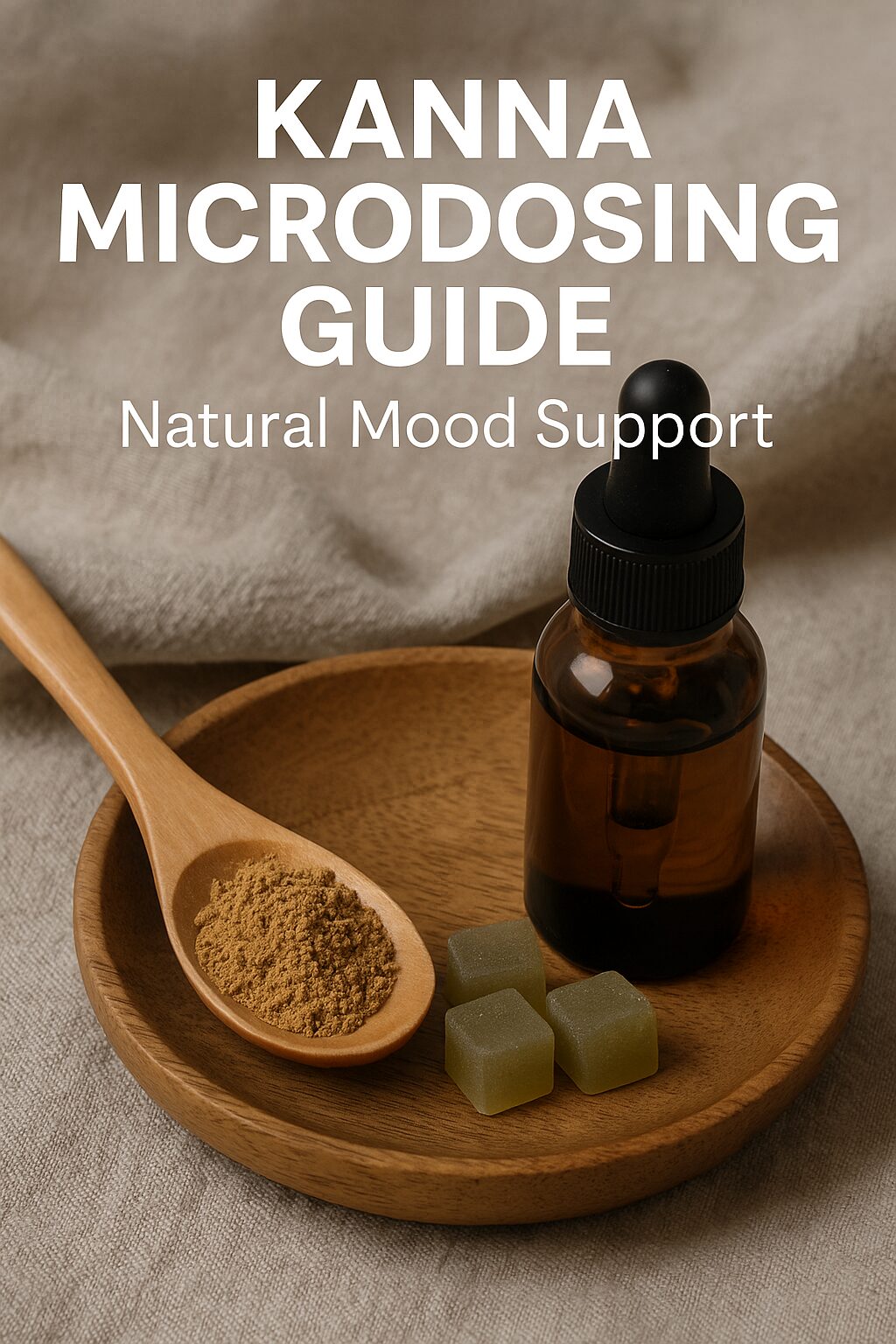
Sceletium tortuosum, commonly called kanna, is a South African plant with a long history of traditional use. Indigenous communities used it for centuries to ease tension and support emotional wellbeing. In recent years, it has attracted interest in modern wellness circles — and in particular, people are exploring kanna microdosing as a structured, low-dose approach.
This guide explains what kanna microdosing is, how the 5-days-on, 2-days-off protocol works, what people commonly report, and what you need to know before you start.
Important: this is an informational guide, not medical advice. Kanna is a food supplement, not a medicine. It is not intended to treat, diagnose, cure, or prevent any condition. If you take any medication — especially SSRIs, SNRIs, or MAOIs — do not use kanna without speaking to a doctor first.
What Is Microdosing?
Microdosing means taking a very small, sub-perceptual amount of a substance. The goal is not to produce a noticeable high or strong effect. Instead, people who microdose aim for a subtle background shift — a gentle influence on mood, focus, or stress levels that sits below the threshold of obvious intoxication.
The term became widely known through research and popular interest in microdosing psychedelics. However, people now apply the same principle to a range of botanicals, including kanna. Because kanna is non-intoxicating even at full doses, a kanna microdose is simply a very small amount of extract — enough to engage the plant’s alkaloids at a low level.
With kanna specifically, microdosing is about consistency rather than intensity. So the protocol matters more than any single dose.
Why Do People Microdose Kanna?
Kanna contains alkaloids — primarily mesembrine and mesembrenone — that interact with the serotonin system and inhibit an enzyme called PDE4. Researchers study these mechanisms in the context of mood regulation, stress response, and cognitive function.
People who microdose kanna report a range of subjective experiences. It is important to note that these are self-reported observations, not clinical outcomes:
- A more stable mood across the day
- Less emotional reactivity during stressful moments
- Greater patience and a calmer baseline
- Easier engagement with tasks that require focus
- A settled feeling that does not tip into drowsiness
Individual responses vary significantly. Some people notice a clear pattern after a few weeks of consistent use. Others report very little. Factors like body weight, diet, metabolism, and the specific extract all influence how kanna feels.
The 5-Days-On, 2-Days-Off Protocol
The most widely used kanna microdosing structure is the 5-days-on, 2-days-off protocol. Practically, this means taking a microdose Monday through Friday and resting on the weekend. However, any five consecutive days followed by two days off works the same way.
The reason for the rest days is twofold. First, it helps prevent tolerance buildup — the body’s tendency to adapt to a substance and require more to achieve the same effect. Second, the rest days give you space to notice whether anything is actually changing. Without a baseline to compare against, subtle effects are easy to miss.
This structure also makes kanna easy to fit into a working week routine, which is why most people find it practical to maintain.
Week-by-Week Guide: One Month of Kanna Microdosing
Week 1 — Start Low, Build Awareness
Begin with the lowest possible dose of your chosen kanna product. Track how you feel within the first hour and throughout the rest of the day. Pay attention to mood, energy, and stress levels. Do not increase the dose this week. The goal is simply to observe your baseline response and establish the habit.
Week 2 — Maintain and Observe
Keep the same dose if Week 1 felt balanced or neutral. Look for any consistent patterns — for example, calmer mornings, fewer reactive moments, or easier focus. Because kanna’s effects at microdose level are subtle, keeping notes helps. A simple daily log of mood and energy takes only a minute and makes Week 4 reflection much more useful.
Week 3 — Integration and Adjustment
By Week 3, your body has had time to integrate kanna at a consistent level. If you have noticed nothing at all after two full weeks, a small increase — staying within the microdosing range — is an option to consider. However, do not increase the dose more than once during the cycle. And if you feel any discomfort, reduce back to the Week 1 dose rather than pushing through.
Week 4 — Reflect and Decide
Use Week 4 to assess honestly. Are you noticing anything? Do you feel more settled, more patient, or more able to manage stress? Or has the experience been neutral? This reflection helps you decide whether to continue, pause, or adjust your approach after the break.
Kanna Microdosing: Dosage Reference
Dosage varies by person, product format, and extract concentration. The figures below are general reference points only — not clinical recommendations. Always start at the lowest end and adjust slowly.
- Low microdose: approximately 5 mg of standardised extract
- Standard microdose: approximately 10–15 mg of standardised extract
Kanna products come in several formats. Each has different absorption characteristics:
- Gummies: pre-dosed, convenient, slower onset due to digestion — good for consistency
- Tinctures: drops under the tongue absorb faster — easier to adjust dose incrementally
- Powder: most flexible for dose control — can be mixed into drinks or smoothies
Always choose products with a clearly labelled extract ratio or alkaloid concentration. If the label does not specify, contact the brand and ask for the COA before using.
Should You Take a Break After a Month?
Yes. After a four-week microdosing cycle, taking a one to two week break is a sensible practice. Even though the 5-on, 2-off rhythm reduces tolerance during the cycle, a longer reset helps you reconnect with your natural baseline.
The break also gives you the clearest answer to the most important question: did kanna actually make a difference? Because the effects are subtle, it is often only during a pause that people notice whether anything has changed.
Some people repeat the cycle monthly. Others use kanna only during demanding periods — a busy work season, a stressful month, or a specific project. Both approaches are valid. The key is intentional use rather than continuous, unmonitored supplementation.
Safety Considerations
⚠️ Do NOT use kanna if you take SSRIs, SNRIs, MAOIs, or any other medication that affects serotonin levels — without first speaking to your doctor. Kanna’s alkaloids affect the serotonin system. Combining them with serotonin-affecting medications raises the risk of serotonin syndrome, a potentially serious medical condition. This is not a minor precaution. It is the most important safety consideration for this plant.
Additional safety guidance:
- Avoid kanna if you are pregnant or breastfeeding — there is insufficient safety data for these groups.
- Avoid kanna if you have a known heart condition — consult a cardiologist before use.
- Start at the lowest dose, especially if you are sensitive to herbal extracts or supplements generally.
- Kanna microdosing is not a substitute for professional mental health support. If you are managing anxiety, depression, or any other mental health condition, work with a qualified professional.
If you are unsure about any interaction or existing health condition, speak to your doctor or pharmacist before starting.
Kanna Products at Canna Health Amsterdam
If you want to try kanna microdosing, Canna Health Amsterdam stocks Kanna Gummies — Cherry Flavour — 25 mg kanna extract per gummy. Each gummy contains a fixed, consistent dose. Because gummies are pre-measured, they are one of the more practical formats for a structured microdosing protocol — you always know exactly how much you are taking.
For microdosing purposes, one gummy provides 25 mg — which sits at the higher end of the standard microdose range. So some people cut gummies in half to start at a lower level. The COA is available on the product page.
These are food supplements, not medicines. Consult a healthcare professional before use, especially if you take any medication.
Final Thoughts
Kanna microdosing is a structured, low-dose approach to exploring this traditional South African plant. The 5-days-on, 2-days-off protocol gives the practice rhythm and prevents the tolerance buildup that comes with daily uninterrupted use.
However, the effects are subtle and individual. So going in with clear expectations — and a willingness to track and reflect honestly — makes the experience more useful than simply taking a supplement and hoping for the best.
If you decide to try it, start low, take the safety considerations seriously, and build in a proper break after four weeks. That is the approach most people who report positive experiences with kanna microdosing actually follow.
References
- Brendler T, et al. (2010). Phytochemistry and pharmacology of Sceletium tortuosum. Journal of Ethnopharmacology, 137(3), 1124–1129. Journal ↗
- Terburg D, et al. (2013). Acute effects of Sceletium tortuosum (Zembrin), a dual 5-HT reuptake and PDE4 inhibitor, in the human amygdala and its connection to the hypothalamus. Neuropsychopharmacology, 38(13), 2708–2716. Journal ↗
- Chiu S, et al. (2014). Proof-of-concept randomized controlled study of cognition effects of the proprietary extract Sceletium tortuosum (Zembrin) targeting phosphodiesterase-4 in cognitively healthy subjects. Evidence-Based Complementary and Alternative Medicine, 2014, 682014. Journal ↗
- Nair AB, Jacob S. (2016). A simple practice guide for dose conversion between animals and human. Journal of Basic and Clinical Pharmacy, 7(2), 27–31. [Dose-extrapolation context for botanical supplements.] Journal ↗
- Harvey AL, et al. (2011). Pharmacological actions of the South African medicinal and functional food plant Sceletium tortuosum and its principal alkaloids. Journal of Ethnopharmacology, 137(3), 1124–1129. Journal ↗
Frequently Asked Questions: Kanna Microdosing
What is kanna microdosing?
Kanna microdosing means taking a very small, sub-perceptual amount of kanna (Sceletium tortuosum) extract on a structured schedule. The goal is not to produce a noticeable high or strong effect. Instead, people who microdose kanna aim for a subtle background influence on mood, stress response, and focus. A common protocol is 5 days on, 2 days off — typically Monday through Friday with rest on the weekend.
How much kanna should I take for microdosing?
General reference points for kanna microdosing are approximately 5 mg of standardised extract at the low end, and 10–15 mg for a standard microdose. However, these are general guidelines, not clinical recommendations. Individual responses vary significantly based on body weight, metabolism, and the specific extract used. Always start at the lowest amount possible and adjust slowly. Consult a healthcare professional if you are unsure about the right approach for your situation.
How long does a kanna microdosing cycle last?
A standard kanna microdosing cycle is four weeks, using a 5-days-on, 2-days-off protocol throughout. After the four-week cycle, taking a one to two week break is recommended. This break helps prevent tolerance buildup and gives you a clearer sense of whether kanna has made any difference. Some people repeat the cycle monthly. Others use it only during particularly demanding periods.
Is kanna microdosing safe?
For healthy adults not taking serotonin-affecting medications, kanna is generally considered a low-risk botanical with a long history of traditional use. However, people who take SSRIs, SNRIs, MAOIs, or any other serotonin-affecting medication must speak to a doctor before using kanna. Combining kanna with these medications raises the risk of serotonin syndrome — a potentially serious condition. Kanna should also be avoided during pregnancy, breastfeeding, and by people with heart conditions. It is not a substitute for professional mental health support.
Disclaimer: This blog is for informational and educational purposes only. We review and reference available studies and reputable sources; however, content may not reflect the most current research or regulations and should not be taken as medical, legal, or professional advice. We do not make or imply health claims. Products mentioned are not intended to diagnose, treat, cure, or prevent any disease and statements have not been evaluated by EFSA or the FDA. Effects can vary between individuals. Always consult a qualified healthcare professional before use and verify that any product or ingredient is lawful in your jurisdiction.