


Napoleon, Cannabis and Hemp: A Napoleonic Wars History

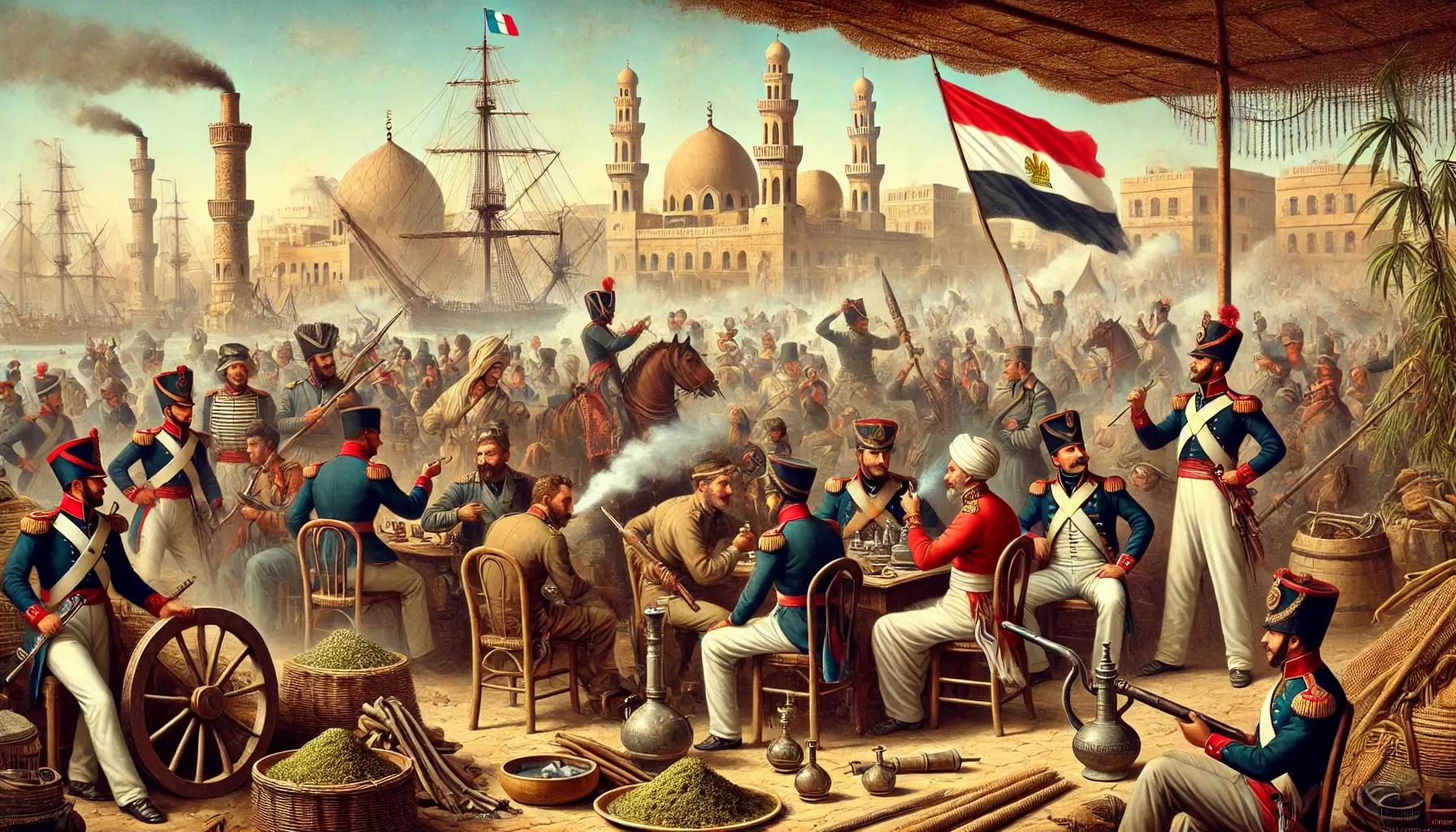
Napoleon Bonaparte shaped European history through military conquest, legal reform, and imperial ambition. But his entanglement with Napoleon cannabis — and with hemp as a strategic war material — is a story that rarely gets told.
Napoleon issued one of the first modern drug prohibition laws in history. He fought Britain partly over hemp supply. And his Egyptian campaign introduced hashish to French soldiers, who carried it home to Paris, where it fuelled the Romantic movement. This story connects military strategy, colonial encounter, cultural history, and the enduring failure of prohibition — all through one plant.
The Egyptian Campaign and the First Cannabis Ban (1798–1800)
Napoleon launched his Egyptian campaign in 1798. His stated aim was to cut British trade routes to India and assert French influence in the eastern Mediterranean. The military results were mixed. Nelson destroyed the French fleet at the Battle of the Nile and stranded the army in Egypt. What nobody anticipated was the cultural exchange that followed.
French soldiers were accustomed to wine and brandy. In Egypt, both were scarce. Hashish, however, was everywhere. Egyptian society had a long and established relationship with cannabis. People consumed it in coffeehouses, markets, and social gatherings across the country. Deprived of familiar drinks, many French troops adopted the local custom. Hashish use spread through the occupying army.
Napoleon himself returned to France in 1799. General Jacques-François Menou remained in command of the French forces in Egypt. In October 1800, Menou issued the formal ban. His proclamation prohibited the manufacture and sale of hashish and ordered the closure of establishments where people consumed it. Menou cited public health concerns and alignment with the Sunni Muslim establishment — a community he had personally joined through conversion and marriage.
This ban is widely considered one of the earliest examples of modern drug prohibition legislation. It was also almost entirely ineffective.
The Persistence of Hashish: Why the Ban Failed
The 1800 ban achieved very little. Cannabis cultivation and hashish consumption in Egypt stretched back thousands of years. Historical records and archaeological evidence suggest use as far back as 3000 BC. A proclamation from a foreign military administration had no meaningful impact on a deeply embedded cultural and commercial practice.
Hashish production, trade, and consumption continued throughout the French occupation. It continued long after the occupation ended. Cairo remained one of the most significant cannabis markets in the world well into the late 19th century. Only Istanbul rivalled it in scale.
When prohibition pressure eventually made Cairo’s cannabis trade more difficult, the industry shifted. Key figures migrated to Morocco. There, they laid the foundations for what became a major centre of global cannabis production.
Meanwhile, French soldiers returning from Egypt brought the habit home. Hashish arrived in France as a direct consequence of Napoleon’s campaign — an unintended cultural import from a military adventure that went strategically wrong.
The Club des Hachichins: Cannabis and the Romantic Movement in Paris
The hashish that soldiers brought back from Egypt found fertile ground in 1840s Paris. The Romantic movement rejected Enlightenment rationalism. It embraced emotion, imagination, and altered states of consciousness. It was naturally receptive to a substance that produced exactly those experiences.
The Club des Hachichins — the Hash-Eaters’ Club — formed around 1844. Members met at the Hôtel Pimodan on the Île Saint-Louis. The club included some of the most significant figures in French literary and artistic culture:
- Théophile Gautier, who wrote the most detailed contemporary account of the club’s sessions
- Charles Baudelaire, who later published extensive reflections on hashish in Les Paradis Artificiels
- Honoré de Balzac, who attended but reportedly declined to participate
- Jacques-Joseph Moreau, the psychiatrist who studied hashish’s effects on the mind as a research tool — producing the first systematic scientific study of cannabis effects
The Club des Hachichins is a direct cultural consequence of Napoleon’s Egyptian campaign. Without the French occupation and the soldiers’ exposure to hashish, the substance would not have reached Paris in the form and quantity it did in the 1840s. Napoleon’s prohibition contributed nothing. The cultural transmission happened regardless.
Hemp as a Weapon of War: The Treaty of Tilsit and British Naval Power
Napoleon failed to suppress cannabis in Egypt. But he understood the strategic importance of hemp in European warfare very clearly.
Hemp was indispensable to naval power. Every sailing warship required enormous quantities of it — for rope, rigging, sail canvas, and caulking. A first-rate ship-of-the-line needed tens of tonnes of hemp products. A navy without hemp could not function.
Britain’s Royal Navy was the dominant force Napoleon could not defeat. It depended heavily on hemp from Russia and Eastern Europe. Russian and Ukrainian hemp supplied much of Europe’s rope and canvas. Napoleon recognised this dependency and moved to exploit it.
After defeating Russia at the Battle of Friedland in 1807, Napoleon negotiated the Treaty of Tilsit with Czar Alexander I. Among its provisions, France required Russia to join the Continental System — Napoleon’s economic blockade of Britain. A central objective was to cut Britain off from Russian hemp. Less hemp meant a weaker navy. A weaker navy meant vulnerability to French dominance of European waters.
The strategy was logical. It was also unworkable.
Russia’s economy depended heavily on the hemp trade with Britain. Russian landowners and merchants had no interest in sacrificing a profitable export relationship for French strategic ambitions. Alexander’s commitment to the Continental System weakened progressively. By 1810, Russia had resumed trading with Britain — including hemp exports.
Napoleon’s response was the catastrophic 1812 invasion. That campaign destroyed his Grande Armée and began his downfall.
Hemp, in this reading of history, was not a background detail of the Napoleonic Wars. It was a strategic commodity. Its supply lines directly shaped alliance politics, triggered a diplomatic breakdown, and contributed to one of history’s most consequential military disasters.
Conclusion
Napoleon’s relationship with cannabis and hemp shows how one plant can operate on multiple levels of history at the same time.
As a prohibited substance, cannabis proved uncontrollable. The ban in Egypt failed immediately. The cultural transmission it was meant to prevent happened anyway.
As a strategic resource, hemp proved equally difficult to control. Russia’s economic self-interest overrode Napoleon’s Continental System — with world-historical consequences.
The Club des Hachichins, the 1800 prohibition, the Treaty of Tilsit, the 1812 invasion — these are not usually told as a connected story about Napoleon, cannabis, and hemp. But they are. His attempts to regulate both the plant and its derivatives were among the most consequential failures of his reign. Their effects echoed through European cultural and political history for generations.
References
- Gautier T. (1846). Le Club des Hachichins. Revue des Deux Mondes. [Primary contemporary account of the Hash-Eaters’ Club, Paris]
- Baudelaire C. (1860). Les Paradis Artificiels. Paris. [Baudelaire’s literary and personal reflections on hashish, directly connected to the Club des Hachichins]
- Moreau JJ. (1845). Du Hachisch et de l’Aliénation Mentale. Paris: Fortin, Masson et Cie. [Psychiatric research on hashish by Club des Hachichins member; first systematic scientific study of cannabis effects]
- Rosenthal F. (1971). The Herb: Hashish versus Medieval Muslim Society. Leiden: Brill. [Historical context for Egyptian hashish culture predating the French occupation]
- Schom A. (1997). Napoleon Bonaparte: A Life. New York: HarperCollins. [Treaty of Tilsit, Continental System, and the 1812 invasion — standard biographical reference for Napoleonic strategic context]
Frequently Asked Questions About Napoleon and Cannabis
Did Napoleon ban cannabis?
Not directly. The formal ban was issued in October 1800 by General Jacques-François Menou, left in command of French forces in Egypt after Napoleon returned to France in 1799. Menou’s proclamation prohibited the manufacture and sale of hashish and closed establishments where it was consumed. It cited public health concerns and alignment with the Sunni Muslim establishment. The ban is considered one of the first examples of modern drug prohibition legislation — and it was almost entirely ineffective.
What was the Club des Hachichins?
The Club des Hachichins — the Hash-Eaters’ Club — was a group of French writers, artists, and intellectuals who met in Paris in the 1840s to consume hashish and document its effects. It formed at the Hôtel Pimodan on the Île Saint-Louis and included Théophile Gautier, Charles Baudelaire, Honoré de Balzac, and the psychiatrist Jacques-Joseph Moreau. It was a direct cultural consequence of Napoleon’s Egyptian campaign — hashish reached Paris through soldiers who encountered it during the occupation and brought the practice back to France.
How did hemp influence the Napoleonic Wars?
Hemp was essential to sailing-ship naval power — used for rope, rigging, canvas, and caulking. Britain’s Royal Navy depended heavily on Russian and Eastern European hemp. Napoleon recognised this and used the Treaty of Tilsit (1807) to force Russia into his Continental System, cutting off Britain’s hemp supply. Russia’s economic dependency on the hemp trade meant it could not sustain this embargo. When Russia resumed trading with Britain in 1810, Napoleon invaded in 1812 — the catastrophic campaign that destroyed his Grande Armée and began his downfall. Hemp supply lines directly contributed to this chain of events.
Why did French soldiers start using hashish in Egypt?
French soldiers in Egypt were cut off from their usual alcohol supplies — wine and brandy were scarce or unavailable. Hashish, by contrast, was ubiquitous in Egyptian society, available in coffeehouses, markets, and social gatherings throughout the country. Deprived of familiar intoxicants and surrounded by an established local culture of hashish use, many French troops adopted the practice. When they returned to France, they brought the habit with them — introducing hashish to Western Europe as an unintended consequence of the Egyptian campaign.
Disclaimer: This blog is for informational and educational purposes only. We review and reference available studies and reputable sources; however, content may not reflect the most current research or regulations and should not be taken as medical, legal, or professional advice. We do not make or imply health claims. Products mentioned are not intended to diagnose, treat, cure, or prevent any disease and statements have not been evaluated by EFSA or the FDA. Effects can vary between individuals. Always consult a qualified healthcare professional before use and verify that any product or ingredient is lawful in your jurisdiction.