


Reishi, CBN and Kratom: What Does Research Explore?

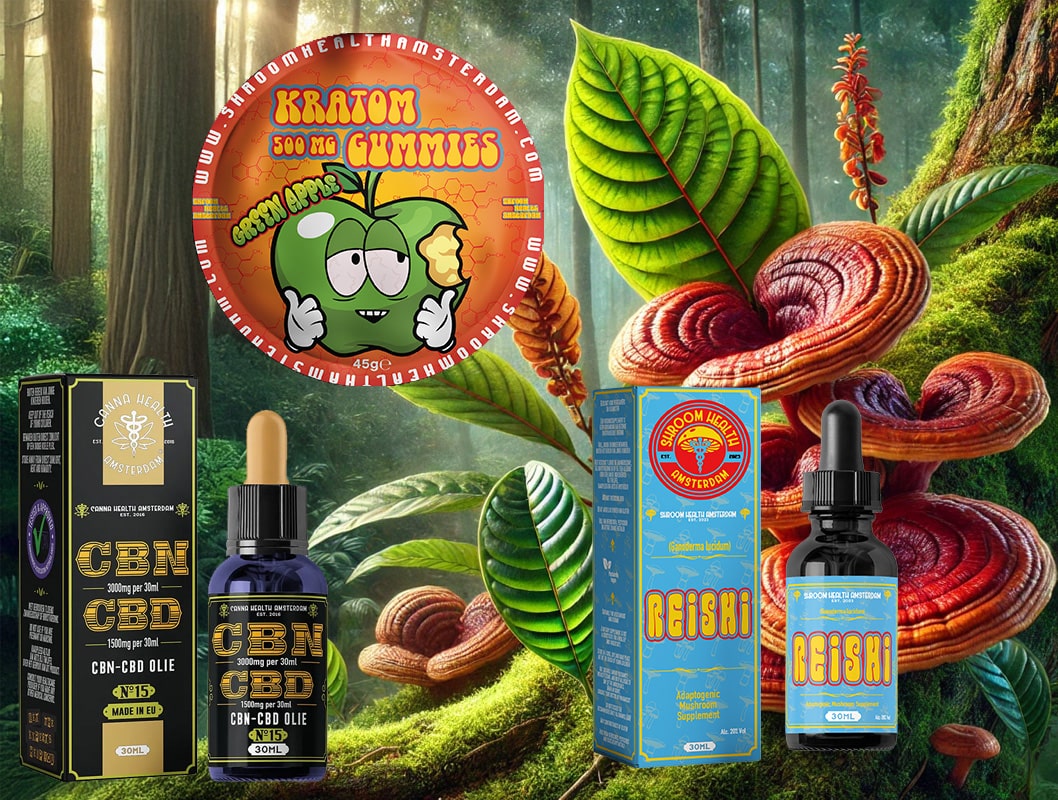
Interest in natural compounds and their relationship to sleep and stress has grown significantly in recent years. Reishi mushroom, CBN (cannabinol), and kratom are three distinct natural substances that researchers study in separate scientific contexts. Each has its own origin, chemical profile, and research background.
This article looks at what science explores in relation to each compound individually, and why they appear together in discussions about natural approaches to sleep and relaxation.
What Is Reishi Mushroom?
Reishi, known scientifically as Ganoderma lucidum, is a medicinal mushroom with a long history of use in traditional East Asian practices. It belongs to a group of fungi that researchers classify as adaptogens — natural substances that scientists study in relation to how the body responds to stress.
Reishi contains several active compounds including polysaccharides, triterpenoids, and beta-glucans. These compounds have attracted significant research interest across immunology, neuroscience, and sleep science.
What Do Researchers Study in Relation to Reishi?
Scientific literature examines Reishi across several research areas:
- Sleep quality and sleep architecture in animal and human observational models
- Immune system modulation through beta-glucan and polysaccharide activity
- Stress response and adaptogenic mechanisms in controlled settings
- Antioxidant activity and cellular protection in laboratory studies
- Gut microbiome interactions in early-stage research
A notable area of interest is Reishi’s relationship to sleep. Some studies suggest that Reishi polysaccharides may influence sleep-related pathways through interactions with gut bacteria and the central nervous system, though researchers note that more rigorous human trials are needed.
What Is CBN (Cannabinol)?
CBN — short for cannabinol — is a minor cannabinoid found in the cannabis plant. Unlike CBD, the plant does not produce CBN directly. It forms when THC breaks down over time through exposure to heat, light, and oxygen. As a result, aged cannabis material tends to contain higher concentrations of CBN.
Scientific literature generally describes CBN as non-intoxicating or only very mildly psychoactive — far weaker than THC. Researchers study CBN to understand its chemical properties and how it interacts with the endocannabinoid system and other biological pathways.
CBN and Sleep Research
CBN frequently appears in sleep-related research discussions. Its association with drowsiness comes from historical observations linking aged cannabis — which contains more CBN — to relaxing effects. Some early studies have explored CBN in sleep models, though current clinical evidence in humans remains limited. Researchers continue to call for well-designed clinical trials to build on these early findings.
What Else Do Researchers Study in Relation to CBN?
Beyond sleep, CBN appears in research examining:
- Neurological processes and nervous system pathways in animal models
- Inflammation-related mechanisms in laboratory settings
- Appetite and feeding behaviour in preclinical studies
- Bacterial models and cellular interactions
What Is Kratom?
Kratom comes from Mitragyna speciosa, a tropical tree native to Southeast Asia. Its leaves contain active alkaloids — primarily mitragynine and 7-hydroxymitragynine — that interact with opioid and other receptors in the body. Kratom has a long history of traditional use in countries like Thailand, Malaysia, and Indonesia.
Researchers study kratom because its active compounds interact with multiple receptor systems simultaneously. Different kratom varieties and concentrations produce different effects in research models, which makes it a complex but scientifically interesting subject.
What Do Researchers Study in Relation to Kratom?
Scientific literature examines kratom across several research areas:
- Receptor binding and alkaloid activity — particularly mitragynine’s interaction with opioid receptors
- Mood and stress-related pathways in observational and survey research
- Sedative and stimulant properties at different concentrations in research models
- Pain pathway interactions in preclinical studies
- Dependency and tolerance mechanisms — an active area of regulatory and scientific debate
Kratom research is more complex than Reishi or CBN because it sits at the intersection of traditional use, regulatory debate, and emerging pharmacology. Scientists approach it with both interest and caution.
Kratom and Legal Status
The legal status of kratom varies significantly by country and region. It is controlled or restricted in several EU member states. Always check the regulations in your country before purchasing or using any kratom product. Availability and classification differ even within Europe.
Why Do Reishi, CBN, and Kratom Appear Together in Research Discussions?
Reishi, CBN, and kratom each appear in scientific literature connected to sleep, stress response, and relaxation — which is why they often show up together in wellness discussions. Each works through entirely different biological mechanisms, which makes their combined study scientifically interesting.
Reishi works primarily through adaptogenic and immune-modulating pathways. CBN interacts with the endocannabinoid system. Kratom’s alkaloids engage opioid and adrenergic receptors. Researchers study each compound individually, and some early research explores how compounds with different mechanisms may interact within broader biological systems.
It is important to note that combining natural compounds introduces additional complexity. Research on multi-compound interactions remains limited, and scientists consistently recommend caution when considering any combination of active substances.
Frequently Asked Questions
What is Reishi mushroom used for in research?
Scientists study Reishi in relation to immune modulation, stress response, antioxidant activity, and sleep-related pathways. Its active compounds — particularly polysaccharides and triterpenoids — are the main focus of research interest. Reishi has one of the longest research histories of any medicinal mushroom.
Is CBN the same as CBD?
No. CBN and CBD are different cannabinoids with different chemical structures and research profiles. CBD comes directly from the plant in larger amounts. CBN forms only after THC breaks down over time. CBD has a much larger body of research behind it. Both are non-intoxicating at standard amounts.
What is kratom made from?
Kratom comes from the leaves of Mitragyna speciosa, a tree native to Southeast Asia. Its leaves contain alkaloids — primarily mitragynine and 7-hydroxymitragynine — that give it its active properties. These alkaloids interact with multiple receptor systems, which is why researchers study kratom across several biological contexts.
Is kratom legal in Europe?
Kratom’s legal status varies across Europe. It is controlled or banned in several EU countries. Always verify the current regulations in your specific country before purchasing or using kratom products. Laws can change and vary significantly even between neighbouring countries.
Do these three compounds interact with the same systems?
No — each works through different biological mechanisms. Reishi acts mainly through immune and adaptogenic pathways. CBN interacts with the endocannabinoid system. Kratom’s alkaloids engage opioid and adrenergic receptors. Their appearance together in sleep-related discussions reflects overlapping research themes rather than shared biological targets.
Conclusion
Reishi, CBN, and kratom are three distinct natural compounds with different origins, different active constituents, and different research profiles. Each draws scientific interest in areas connected to sleep, stress, and relaxation — which is why they appear together in wellness discussions.
Research on all three remains active and evolving. Reishi has the longest and most established research history of the three. CBN sits within the growing field of minor cannabinoid science. Kratom occupies a more complex space where traditional use, emerging pharmacology, and regulatory debate intersect. Always verify the legal status of kratom in your country before use.
References
- Cui XY, et al. (2012). Extract of Ganoderma lucidum prolongs sleep time in rats. Journal of Ethnopharmacology, 139(3), 796–800. PubMed ↗
- Wachtel-Galor S, et al. (2011). Ganoderma lucidum (Lingzhi or Reishi): A Medicinal Mushroom. In: Herbal Medicine: Biomolecular and Clinical Aspects. CRC Press. NCBI ↗
- Kaul M, et al. (2021). A systematic review of human studies examining the effects of cannabidiol and cannabinol on sleep. Current Psychiatry Reports, 23(3), 1–14. PubMed ↗
- Prozialeck WC, et al. (2012). Pharmacology of kratom: an emerging botanical agent with stimulant, analgesic and opioid-like effects. Journal of the American Osteopathic Association, 112(12), 792–799. PubMed ↗
- Singh D, et al. (2016). Ethnobotanical and ethnopharmacological aspects of kratom (Mitragyna speciosa Korth.). Journal of Ethnopharmacology, 189, 255–265. PubMed ↗
Disclaimer: This blog is for informational and educational purposes only. We review and reference available studies and reputable sources; however, content may not reflect the most current research or regulations and should not be taken as medical, legal, or professional advice. We do not make or imply health claims. Products mentioned are not intended to diagnose, treat, cure, or prevent any disease and statements have not been evaluated by EFSA or the FDA. Effects can vary between individuals. Always consult a qualified healthcare professional before use and verify that any product or ingredient is lawful in your jurisdiction.