



THCV and Cancer: What Does Preclinical Research Explore?

This article covers laboratory and preclinical research on THCV and cancer-related biological mechanisms. It does not constitute medical advice. THCV is not a cancer treatment. No clinical trials have established THCV as safe or effective for any cancer indication. Anyone with cancer or a cancer diagnosis should work exclusively with their oncology team for treatment decisions.
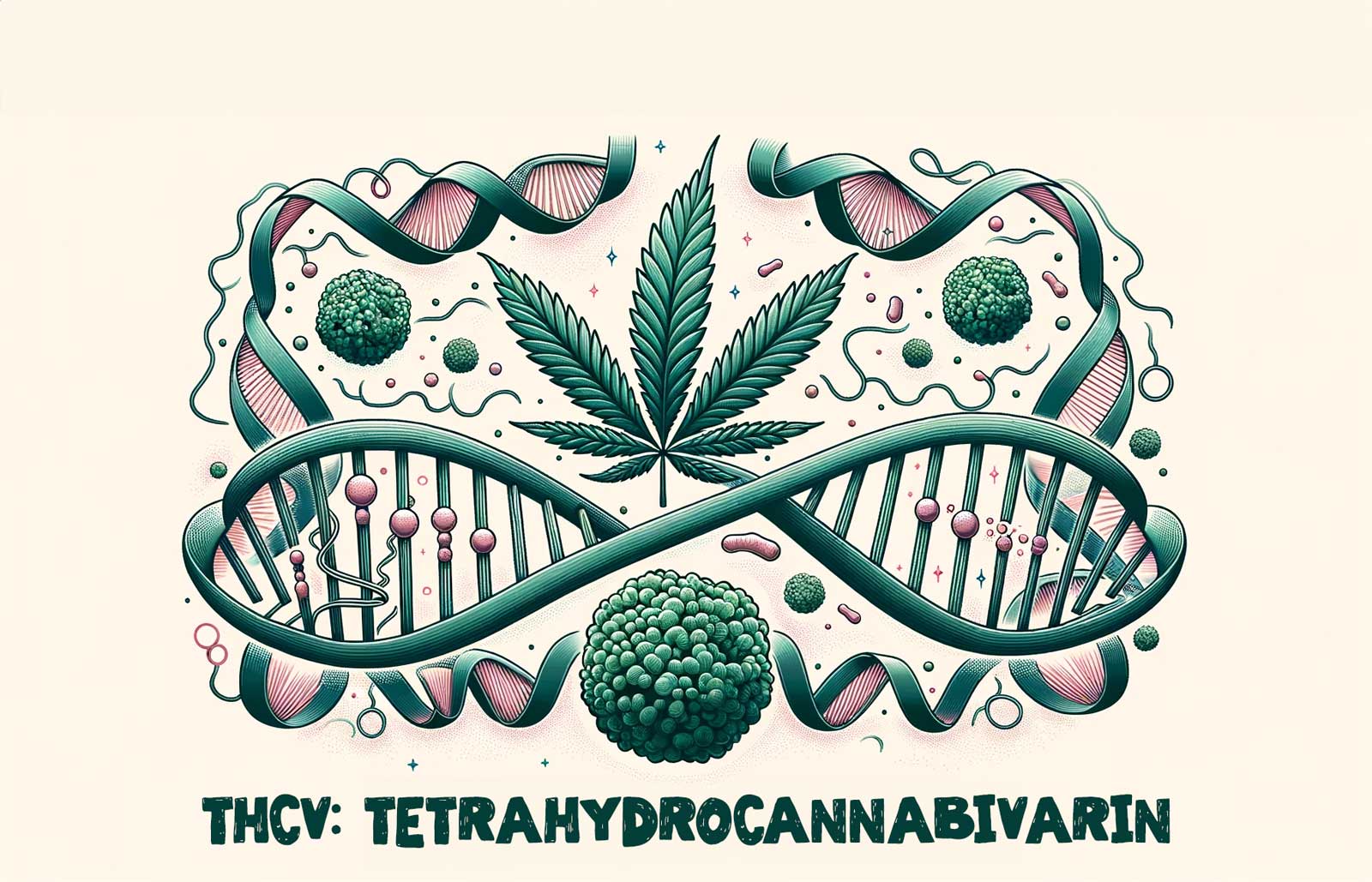
THCV — tetrahydrocannabivarin — is a minor cannabinoid that appears in cannabinoid oncology research because of its interaction with biological pathways involved in cell growth and proliferation. Laboratory studies have examined THCV in relation to several mechanisms relevant to cancer biology. However, this research is entirely preclinical — conducted in cell cultures and animal models — and no human clinical trials on THCV as a cancer treatment currently exist.
This article explains what those laboratory findings explore, what each mechanism involves biologically, and why the gap between preclinical findings and clinical application is significant.
THCV and the Endocannabinoid System
THCV interacts with the endocannabinoid system — a cellular signalling network involved in regulating processes including immune response, inflammation, and cell survival. At low doses, THCV acts primarily as a CB1 receptor antagonist. At higher doses, it shows partial agonist activity. It also interacts with CB2 receptors, which are particularly relevant to immune function and are found on immune cells and in peripheral tissues.
CB1 and CB2 receptors appear on various cancer cell lines in laboratory settings, which is one reason researchers study cannabinoids in oncology contexts. However, receptor presence in a cancer cell line does not establish that activating or blocking that receptor produces clinically meaningful anti-cancer effects in humans. The biology is considerably more complex.
THCV’s psychoactive profile note:
Unlike CBD, THCV can produce psychoactive effects at higher doses. At low doses it does not typically produce strong psychoactive effects, but this is dose-dependent. This is relevant context for any future clinical research design involving THCV.
THCV and Apoptosis Research
Apoptosis is programmed cell death — a normal biological process through which the body removes damaged, old, or abnormal cells. In cancer, apoptosis signalling frequently breaks down, allowing cells to proliferate uncontrollably. This makes apoptosis pathways a major focus of oncology research across many drug classes.
Laboratory studies have examined how cannabinoids — including THCV — interact with apoptosis signalling in cancer cell lines. Some in vitro findings suggest that cannabinoids can activate apoptosis in certain cancer cell lines under laboratory conditions. These are cell culture findings. They describe what happens when THCV is applied to isolated cancer cells in a controlled laboratory environment. They do not describe what happens inside a living human body with a tumour.
The path from ‘this compound triggers apoptosis in isolated cancer cells’ to ‘this compound is an effective cancer treatment’ is one of the longest and most frequently unsuccessful in pharmaceutical research. Most compounds that show apoptosis activity in vitro fail in animal models or human trials for reasons including toxicity, bioavailability, selectivity, and off-target effects.
Anti-Angiogenic Research: THCV and Tumour Blood Supply
Angiogenesis — the formation of new blood vessels — is essential to tumour growth. Tumours stimulate the growth of new vessels to supply themselves with oxygen and nutrients. Anti-angiogenic therapies that disrupt this supply are an established area of oncology research, with several approved anti-angiogenic drugs in clinical use.
Some cannabinoid research — primarily examining CBD and THC rather than THCV specifically — has explored anti-angiogenic activity in laboratory models. A broad review of Cannabis sativa components published in the International Journal of Molecular Sciences discusses anti-angiogenic properties among the general cannabinoid research landscape. THCV appears within this broader cannabinoid context. The specific THCV-focused anti-angiogenic evidence base is limited and remains at the in vitro and early preclinical stage.
Anti-Metastatic Research
Metastasis — the spread of cancer from its origin to other parts of the body — is the primary cause of cancer mortality. Preventing or slowing metastasis is consequently one of the most important goals in oncology research. Laboratory studies have examined whether cannabinoids influence cell migration and invasion — two processes involved in metastasis.
Some in vitro studies have found that cannabinoids reduce cell migration in cancer cell line models. As with apoptosis research, these findings describe behaviour in isolated cell cultures. Cancer metastasis in a living organism involves a vastly more complex set of biological interactions than cell migration in a culture dish. No THCV-specific anti-metastatic evidence from human trials exists.
Drug Resistance Research
Drug resistance — when cancer cells develop the ability to survive exposure to chemotherapy — is a significant challenge in oncology. Some cannabinoid research has explored whether cannabinoids interact with drug resistance mechanisms in cancer cell lines. This is a scientifically legitimate area of inquiry.
However, the framing of this research requires care. Laboratory findings suggesting a cannabinoid interacts with resistance pathways in isolated cancer cells are not evidence that giving THCV to a person receiving chemotherapy would improve their treatment outcomes. That conclusion would require clinical trials showing safety, efficacy, and no adverse interactions with existing cancer drugs — none of which exist for THCV.
What the Evidence Does Not Show
Given the sensitivity of this topic, it is important to state clearly what the available evidence does not establish:
- No clinical trial evidence shows THCV treats any form of cancer in humans
- No clinical trial evidence shows THCV slows cancer progression in humans
- No clinical trial evidence shows THCV enhances chemotherapy outcomes in humans
- No clinical trial evidence shows THCV prevents cancer metastasis in humans
- In vitro and animal model findings do not transfer automatically to human clinical outcomes
- THCV is not approved for any cancer indication in any jurisdiction
- THCV supplements are not equivalent to pharmaceutical-grade cannabinoid compounds used in research
Preclinical cannabinoid oncology research is scientifically legitimate and worth reporting accurately. However, reporting it accurately means maintaining the distinction between laboratory observations and clinical evidence — a distinction the original article consistently collapsed.
Conclusion
THCV appears in oncology research because of its interaction with biological pathways — apoptosis, angiogenesis, cell migration, and drug resistance mechanisms — that are relevant to cancer biology. These interactions have been observed in laboratory settings and documented in review literature covering cannabinoid science broadly.
The research represents an early-stage scientific inquiry, not a clinical development programme. No human trials on THCV as a cancer treatment exist. Anyone with cancer should base their treatment decisions entirely on guidance from their oncology team.
References
- Andre CM, et al. (2016). Cannabis sativa: the plant of the thousand and one molecules. Frontiers in Plant Science, 7, 19. [Broad Cannabis sativa review — the source cited in the original article] PubMed ↗
- Śledziński P, et al. (2021). The current state and future perspectives of cannabinoids in cancer biology. Cancer Medicine, 10(6), 1895–1906. [Cannabinoids and cancer mechanisms review] PubMed ↗
- Velasco G, et al. (2012). Towards the use of cannabinoids as antitumour agents. Nature Reviews Cancer, 12(6), 436–444. [Cannabinoid oncology mechanisms including apoptosis and angiogenesis] PubMed ↗
- Ladin DA, et al. (2016). Preclinical and clinical assessment of cannabinoids as anti-cancer agents. Frontiers in Pharmacology, 7, 361. [Preclinical to clinical translation limitations] PubMed ↗
Frequently Asked Questions About THCV and Cancer Research
Can THCV treat cancer?
No. THCV is not a cancer treatment. No human clinical trials have established THCV as safe or effective for any cancer indication. Laboratory research has examined THCV’s interaction with cancer-related biological mechanisms in cell cultures and animal models. These are early-stage findings. They do not establish clinical efficacy. Anyone with cancer should base all treatment decisions on guidance from their oncology team.
What is apoptosis and why do researchers study it in cancer biology?
Apoptosis is programmed cell death — the process by which the body removes damaged, old, or abnormal cells. In cancer, apoptosis signalling frequently breaks down, allowing cells to multiply without the normal self-destruction mechanism. This makes apoptosis pathways a major focus of oncology research across many drug classes, including cannabinoids. Laboratory studies have observed cannabinoids triggering apoptosis in isolated cancer cell lines, but this is in vitro evidence — it does not establish the same effect in a living human with cancer.
What is the difference between preclinical research and clinical evidence?
Preclinical research takes place in cell cultures (in vitro) or animal models (in vivo). It examines how a compound behaves in controlled laboratory conditions. Clinical evidence comes from human trials — randomised controlled trials that test safety and efficacy in real patients. Most compounds that show promising results in preclinical research do not replicate those results in human trials. The gap between preclinical findings and clinical application is one of the widest in pharmaceutical research. All THCV cancer research currently sits at the preclinical stage.
Do cannabinoids have any approved uses in cancer treatment?
Yes — but for symptom management, not as direct anti-cancer agents. Dronabinol (synthetic THC) and nabilone are approved in some countries for chemotherapy-induced nausea and vomiting. These are supportive care applications. They do not treat cancer itself. No cannabinoid has received regulatory approval as a direct anti-cancer therapy in any jurisdiction. Cannabinoid oncology research continues, but remains at a clinical trial and preclinical stage.
Where can I find reliable information about cancer treatment?
Your oncologist and specialist care team are the most important sources of guidance. KWF Kankerbestrijding (kwf.nl) is the Netherlands’ leading cancer charity and provides Dutch-language resources. Cancer Research UK (cancerresearchuk.org) offers detailed, evidence-based information in English. The European Society for Medical Oncology (esmo.org) publishes patient guides based on current clinical guidelines.
Disclaimer: This blog is for informational and educational purposes only. We review and reference available studies and reputable sources; however, content may not reflect the most current research or regulations and should not be taken as medical, legal, or professional advice. We do not make or imply health claims. Products mentioned are not intended to diagnose, treat, cure, or prevent any disease and statements have not been evaluated by EFSA or the FDA. Effects can vary between individuals. Always consult a qualified healthcare professional before use and verify that any product or ingredient is lawful in your jurisdiction.