

What Is CBG in Gummies? Effects, Uses & How It Works
CBG is appearing in more gummy products across Europe. But most people who search for it have the same question: what exactly is CBG in gummies, and how is it different from CBD?
The short answer is that CBG and CBD are both non-intoxicating cannabinoids from hemp — but they have different molecular structures, interact with the body in different ways, and attract different types of users. In addition, putting CBG into a gummy format changes how it works compared to other delivery methods.
This article explains all of that clearly. By the end, you will know what CBG is, why the gummy format matters, and whether CBG gummies are worth trying.
What Is CBG?
CBG stands for cannabigerol. Researchers sometimes call it the mother cannabinoid because the hemp plant produces it first, before converting it into CBD, THC, and other cannabinoids as the plant matures. Because of this, most mature hemp plants contain only small amounts of CBG — typically under 1%.
However, breeders have developed high-CBG hemp strains in recent years. So producers can now extract CBG in meaningful quantities and use it in products like gummies, oils, and capsules.
Importantly, CBG is non-intoxicating. Unlike THC, it does not bind to CB1 receptors in the brain in the same way. So it does not produce a high. This makes CBG suitable for daytime use, which is one reason people choose it over THC-based products.
CBG vs CBD: What Is the Difference?
This is the most common follow-up question. Both CBD and CBG come from hemp. Both are non-intoxicating. However, they are not the same compound and people often report different experiences from each.
CBD is more widely studied and available. Researchers have been studying it for longer, and there is more clinical data on it. CBG research is newer and more limited — but growing fast.
In terms of how people describe the experience, CBD users often associate it with relaxation and winding down. CBG users, on the other hand, tend to describe a clearer, more alert feeling. Because of this, many people reach for CBG during the day and CBD in the evening.
Neither compound is a medicine. However, they work through different pathways in the endocannabinoid system. CBD mainly interacts with CB1 and CB2 receptors indirectly. CBG interacts more directly with both receptor types, as well as other receptor systems. So the mechanisms behind the two are genuinely different, not just marketing language.
Why Does the Gummy Format Matter?
This is the part most articles skip — but it matters. When you take CBG in a gummy, the absorption process is different from oils or inhaled products. Understanding this helps you use the product correctly.
When you eat a CBG gummy, the cannabinoid passes through your digestive system before entering your bloodstream. Because of this, the onset is slower than sublingual oils — typically between 30 minutes and 2 hours depending on your metabolism and whether you have eaten.
However, the tradeoff is duration. Gummies tend to produce a longer-lasting effect than inhaled products. So while the onset is slower, the window of effect is broader. Many people find this suits daily use better than faster-acting formats.
Gummies also offer consistent dosing. Each gummy contains a fixed amount of CBG, so there is no measuring or guesswork. This makes it easier to find the dose that works for you and repeat it reliably.
In short: gummies are not the fastest delivery method, but they are one of the most practical for daily, consistent use.
What Do People Use CBG Gummies For?
CBG gummies attract a specific type of user — one who wants a non-intoxicating cannabinoid that suits the daytime. Based on user surveys and customer feedback, people most commonly use CBG gummies for:
- Focus and concentration during work or study
- A calm, settled feeling without sedation
- Managing periods of high mental load or stress
- A consistent daily supplement as part of a broader wellness routine
Some CBG gummies also combine CBG with nootropic ingredients — for example, Bacopa extract, Ginkgo biloba, Alpha GPC, Zinc, and Vitamin B5. These formulas appeal to people who want a single gummy that covers both the cannabinoid and the cognitive support angle.
However, it is important to be clear: CBG gummies are not medicines. They are not approved treatments for any condition. Individual responses vary significantly. What works well for one person may feel different for another.
How Do CBG Gummies Feel?
The most honest answer is: subtle. CBG gummies do not produce dramatic effects. Instead, people who use them consistently often describe a background shift — feeling slightly more settled, less mentally scattered, or more able to concentrate.
Because CBG is non-intoxicating, there is no high and no sedation. So the effects are easy to miss if you are expecting something obvious. This is why consistent daily use tends to give a clearer picture than taking a single gummy once.
First-time users should start with one gummy and wait at least two hours before assessing the effect. Also, giving it two to three weeks of daily use before drawing conclusions is a sensible approach — as with many supplements, the effects of CBG may build over time.
Are CBG Gummies Legal in Europe?
Yes — in most European countries, CBG gummies are legal when made from hemp and kept below the local THC limit. In most EU member states, that limit is 0.2%.
CBG is non-intoxicating and does not fall under controlled substance rules in most EU markets. However, laws vary across countries. So always check the rules in your specific location before ordering — especially outside the Netherlands or Western Europe.
Want to Go Deeper?
This article covers the basics of what CBG in gummies is. If you want to go further, here are the next steps:
- Best CBG Gummies in Europe (2025) — a full review of the top options available now, including full ingredient breakdowns and lab testing details.
- CBG Gummies for Focus and Calm — a deeper look at how people use CBG gummies during the day and what to expect over time.
- CBG Gummies for Sale in Europe — what to check before you buy, how to read a COA, and where to find EU-compliant products.
CBG Gummies From Canna Health Amsterdam
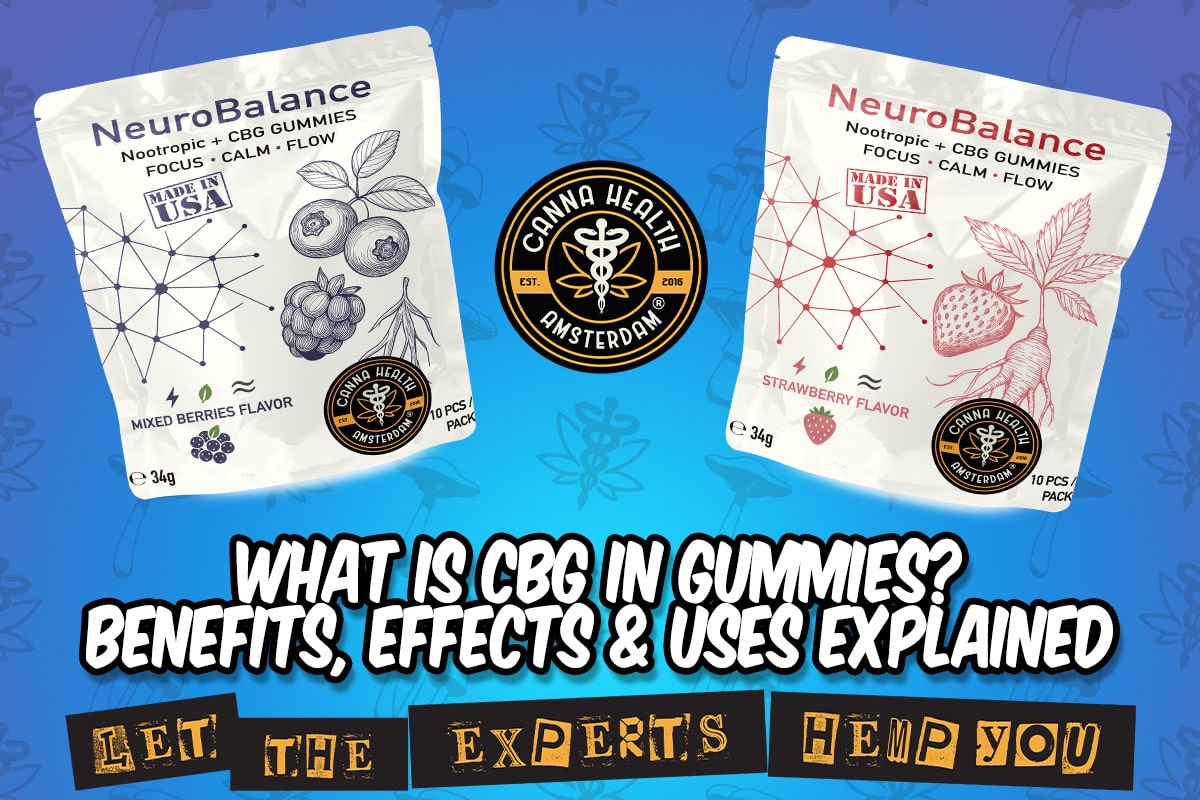
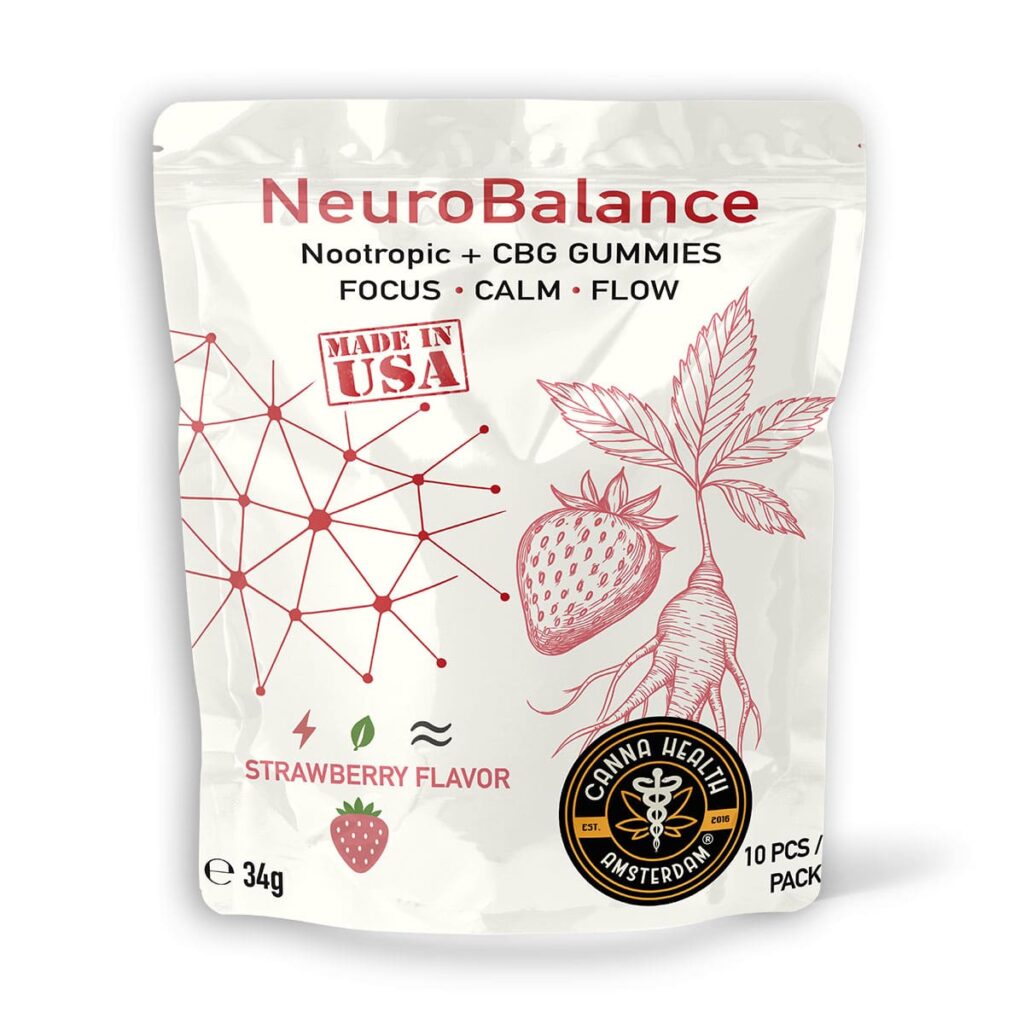
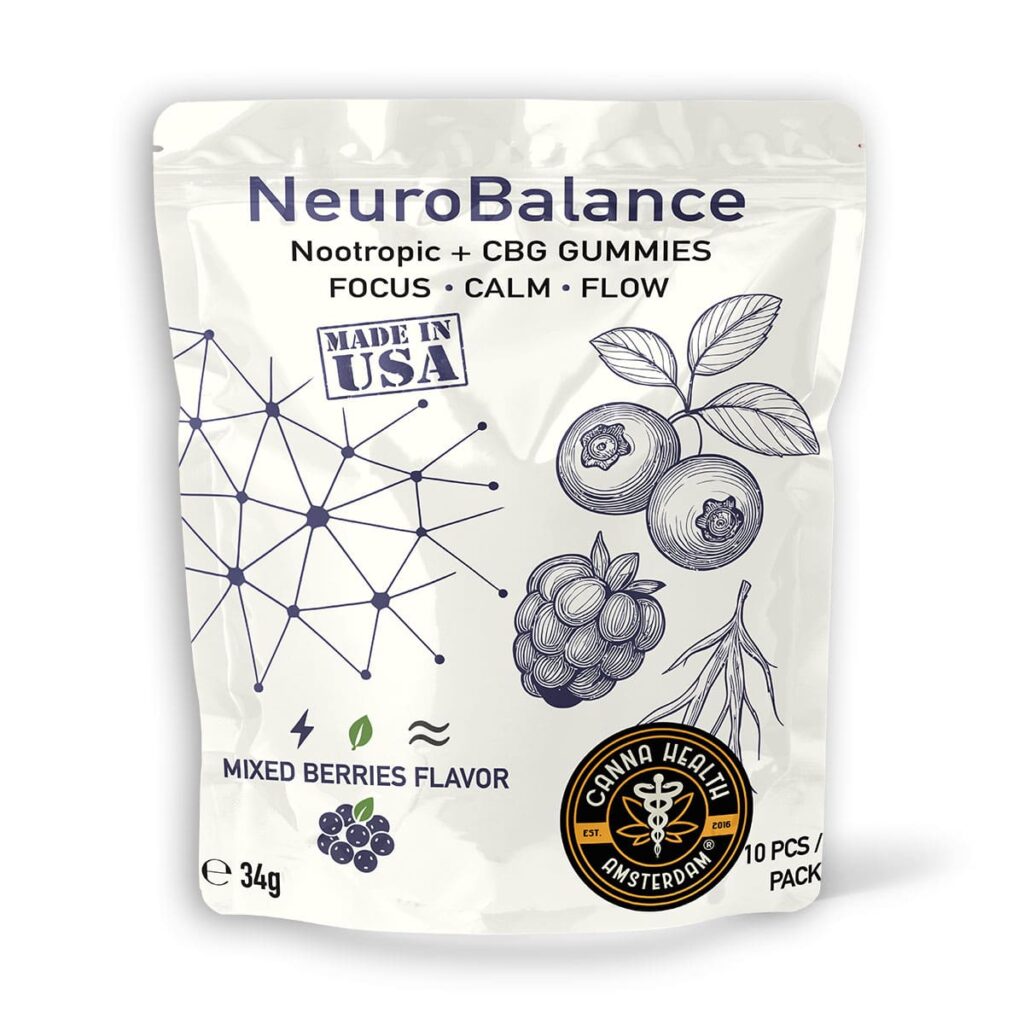
At Canna Health Amsterdam, we stock the NeuroBalance Focus CBG Gummies — available in Strawberry and Mixed Berries. Each gummy contains 25 mg of CBG alongside a nootropic blend. All products are independently lab-tested, EU THC-compliant, vegan, and gluten-free.
You can find the full ingredient list and COA on each product page.
References
- Nachnani R, et al. (2021). The pharmacological case for cannabigerol. Journal of Pharmacology and Experimental Therapeutics, 376(2), 204–212. Journal ↗
- Andre CM, et al. (2016). Cannabis sativa: The plant of the thousand and one molecules. Frontiers in Plant Science, 7, 19. Journal ↗
- Lu HC, Mackie K. (2016). An introduction to the endogenous cannabinoid system. Biological Psychiatry, 79(7), 516–525. Journal ↗
- Millar SA, et al. (2019). A systematic review on the pharmacokinetics of cannabidiol in humans. Frontiers in Pharmacology, 10, 1365. [Used for edible absorption and onset timing context.] Journal ↗
- Patel M, et al. (2021). Survey of patients employing cannabigerol-predominant cannabis preparations. Cannabis and Cannabinoid Research, 7(5), 706–716. Journal ↗
Frequently Asked Questions: What Is CBG in Gummies?
What is CBG in gummies?
CBG in gummies refers to cannabigerol — a non-intoxicating cannabinoid from hemp — infused into an edible gummy format. CBG is sometimes called the mother cannabinoid because the hemp plant produces it first, before converting it into CBD and THC. When included in a gummy, CBG is absorbed through the digestive system, which means onset is slower than oils but the effect tends to last longer. CBG gummies are non-intoxicating and legal in most EU countries when THC stays below 0.2%.
Is CBG the same as CBD?
No — CBG and CBD are different cannabinoids. Both come from hemp and both are non-intoxicating. However, they have different molecular structures and interact with the body’s endocannabinoid system in different ways. CBD is more widely available and has more clinical research behind it. CBG research is newer but growing. People often describe CBD as more relaxing and CBG as clearer and more alert-friendly. Neither is a medicine or approved treatment for any condition.
How long do CBG gummies take to work?
CBG gummies typically take between 30 minutes and 2 hours to take effect. This is because the cannabinoid passes through the digestive system before entering the bloodstream. The exact timing depends on your metabolism, body weight, and whether you have eaten recently. Taking CBG gummies on an empty stomach may produce a faster onset. However, the effect from gummies tends to last longer than faster-acting formats like oils or vapes.
What does CBG in gummies feel like?
Most people describe CBG gummies as subtle. There is no high and no heavy sedation. Users commonly report feeling slightly more settled, less mentally scattered, or more able to concentrate — but the effect is in the background rather than something obvious. First-time users should start with one gummy and give it at least two to three weeks of consistent daily use before drawing conclusions. Individual responses to CBG vary significantly.
Disclaimer: This blog is for informational and educational purposes only. We review and reference available studies and reputable sources; however, content may not reflect the most current research or regulations and should not be taken as medical, legal, or professional advice. We do not make or imply health claims. Products mentioned are not intended to diagnose, treat, cure, or prevent any disease and statements have not been evaluated by EFSA or the FDA. Effects can vary between individuals. Always consult a qualified healthcare professional before use and verify that any product or ingredient is lawful in your jurisdiction.