


What Is Delta-8 THC? Effects, Research and Legal Status

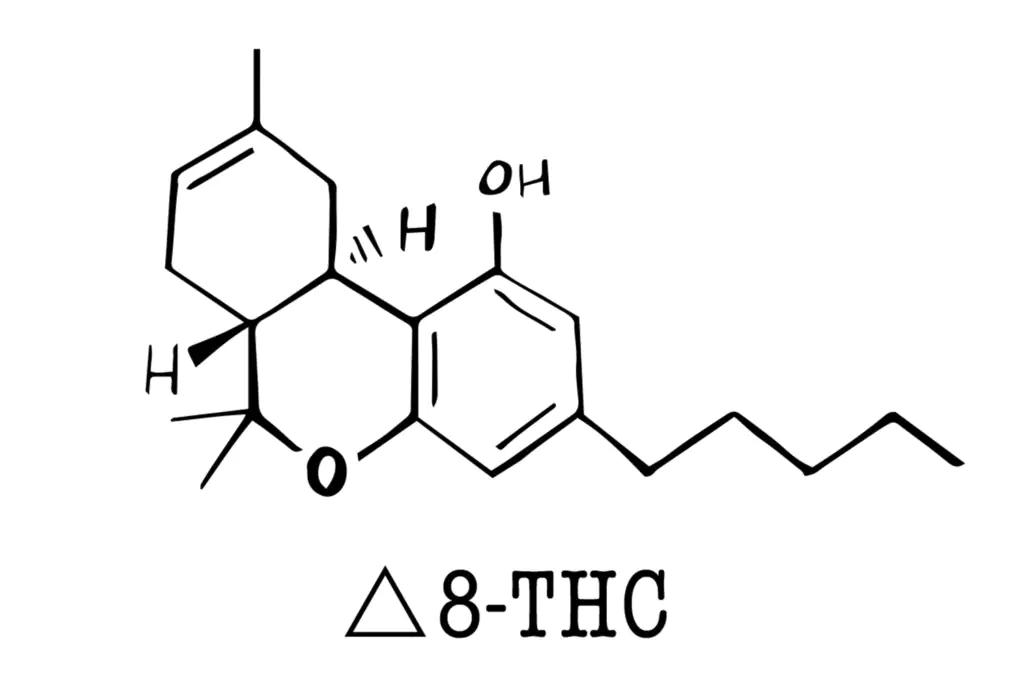
Important: Delta-8 THC is a controlled substance in the Netherlands under the Opium Act (Opiumwet). It is not legally available for sale or purchase in the Netherlands. This article is purely educational. It covers the pharmacology, research context, and legal status of Delta-8 THC. It does not promote the use or acquisition of this substance.
Delta-8 THC — delta-8-tetrahydrocannabinol — (D8-THC) is a minor cannabinoid that occurs naturally in cannabis and hemp plants. It attracted significant commercial attention in the United States from around 2019 onwards, primarily because of a legal ambiguity in US hemp regulations. However, D8 THC occupies a very different legal position in Europe. Understanding what it is, how it differs from Delta-9 THC, and why it is regulated as it is requires looking at both its chemistry and its pharmacology.
Delta-8 THC vs Delta-9 THC: The Chemical Difference
Delta8 THC and Delta-9 THC are structural isomers. They share the same molecular formula but differ in one key detail: the position of a double bond in the carbon chain. In Delta-9 THC, the double bond sits on the ninth carbon. In D8 THC, it sits on the eighth. This small structural difference produces a meaningfully different pharmacological profile.
Delta-8 THC occurs in cannabis plants at very low concentrations — typically well below one percent of the plant’s total cannabinoid content. Most D8 THC products on the US market are not naturally extracted from hemp. Instead, manufacturers produce them synthetically by chemically converting CBD into D8 THC through an isomerisation process. This is an important distinction: D8 THC sold commercially is largely a synthetic conversion product, not a naturally derived cannabinoid.
How Does Delta-8 THC Work Pharmacologically?
Delta-8 THC is a CB1 receptor agonist. It binds to CB1 receptors in the central nervous system — the same receptor that Delta-9 THC activates. This is why D-8 THC produces psychoactive effects. CB1 activation produces the characteristic psychoactive experience associated with THC compounds. D8 THC’s binding affinity at CB1 receptors is lower than Delta-9 THC’s. Research suggests this results in a less potent psychoactive effect for equivalent doses.
Delta-8 THC also shows some CB2 receptor activity. CB2 receptors are more prevalent in immune tissue and the peripheral nervous system. Researchers have examined Delta-8 in relation to nausea, appetite, and pain signalling in preclinical models. However, the human clinical evidence base for D-8 THC specifically is very limited. Most available evidence comes from animal studies or extrapolation from Delta-9 THC research.
Is Delta-8 THC Psychoactive?
Yes. Delta-8 THC is psychoactive. This is a straightforward pharmacological fact — it activates CB1 receptors in the brain. Some sources describe Delta-8 as producing a ‘milder’ effect than Delta-9 THC. Research does suggest lower CB1 binding affinity compared to Delta-9, which is consistent with reduced potency at equivalent doses. However, ‘milder’ does not mean non-psychoactive.
Furthermore, the dose-dependency of Delta-8 THC’s effects is not well established in human clinical research. Higher concentrations could produce effects comparable to Delta-9 THC. The psychoactive nature of Delta-8 THC is a primary reason it falls under controlled substance legislation in the Netherlands and much of Europe.
What Does Research on Delta-8 THC Explore?
The Delta-8 THC research literature is smaller than that of Delta-9 THC or CBD. Several areas appear in published research:
Antiemetic Properties
An early study by Abrahamov et al. (1995) published in Life Sciences examined Delta-8 THC in children undergoing chemotherapy. Researchers found it reduced vomiting in all cases over the trial period. This remains one of the most cited Delta-8 specific human studies. However, it involved a small number of participants and used pharmaceutical-grade material under clinical supervision. It does not provide a basis for general use recommendations.
Appetite and Neuroprotection (Preclinical)
Animal studies have examined D8 THC in relation to appetite stimulation and neuroprotective activity. Avraham et al. (2004) found increased food intake in mice at low doses of Delta-8 THC. These are preclinical findings. They describe behaviour in animal models and do not establish clinical effects in humans.
Legal Status of D8 THC in the Netherlands and Europe
Delta-8 THC is a controlled substance in the Netherlands. It falls under the Opium Act (Opiumwet) as a THC isomer. The Dutch interpretation does not distinguish between THC isomers — Delta-8 and Delta-9 are both regulated as THC. This means Delta-8 THC products are illegal to sell, import, or possess in the Netherlands.
The legal situation in the US is different and generated the commercial Delta-8 market. US hemp legislation defined hemp by its Delta-9 THC content only — below 0.3% Delta-9 THC. D8 THC converted from CBD technically fell outside this definition in many US states. However, the US Drug Enforcement Administration (DEA) and multiple states have since moved to close this gap. Consequently, the US grey area that enabled the Delta-8 market has narrowed considerably.
Across the EU, Delta-8 THC is broadly treated as a controlled THC isomer. Consumers in the Netherlands and wider EU should not attempt to purchase D-8 THC products — including from foreign online retailers. Importing controlled substances carries legal risk regardless of where the product was legally sold.
Safety Considerations in the Research Literature
The safety profile of D8 THC in humans is not well established. The compound is psychoactive. Standard THC-related cautions apply — it is not appropriate for people with personal or family history of psychosis, it can impair driving and machinery operation, it should not be used during pregnancy or breastfeeding, and it may interact with medications. Additionally, because most commercial Delta-8 products involve chemical synthesis from CBD, product purity and contamination with reaction by-products is a legitimate concern. This is a specific risk with synthetically converted cannabinoids.
Conclusion
Delta-8 THC is a structurally distinct but pharmacologically similar isomer of D9 THC. It is psychoactive, binds CB1 receptors, and has attracted limited but genuine research interest — particularly in antiemetic and appetite contexts. However, its human clinical evidence base is thin. Moreover, it is a controlled substance in the Netherlands and is not legally available here.
Readers interested in legal cannabinoids available in the Netherlands — including CBD, CBG, CBN, and THCV — can explore our cannabinoid guide.
References
- Abrahamov A, et al. (1995). An efficient new cannabinoid antiemetic in pediatric oncology. Life Sciences, 56(23–24), 2097–2102. PubMed ↗
- Avraham Y, et al. (2004). Very low doses of d8-THC increase food consumption and alter neurotransmitter levels following weight loss. Pharmacology Biochemistry and Behavior, 77(4), 675–684. PubMed ↗
- Kruger JS, Kruger DJ. (2022). Delta-8-THC: Delta-9-THC’s nicer younger sibling? Journal of Cannabis Research, 4(1), 4. PubMed ↗
- Helander A, et al. (2021). Intoxications involving delta-8-tetrahydrocannabinol. Clinical Toxicology, 60(3), 368–370. [Safety and purity concerns in synthetically converted Delta-8 products] PubMed ↗
Frequently Asked Questions About Delta-8 THC
Is Delta-8 THC legal in the Netherlands?
No. Delta-8 THC is a controlled substance in the Netherlands under the Opium Act (Opiumwet). It is classified as a THC isomer and is not legally available for sale or purchase. This applies to online purchases from foreign retailers as well — importing controlled substances into the Netherlands is illegal regardless of where the product was sold. D8 THC is broadly controlled across the EU.
What is the difference between Delta-8 THC and Delta-9 THC?
Delta-8 THC and Delta-9 THC are structural isomers — they share the same molecular formula but differ in the position of a double bond in the carbon chain. Delta-8 has the double bond on the eighth carbon; Delta-9 on the ninth. Both are CB1 receptor agonists and both are psychoactive. Research suggests Delta-8 binds CB1 receptors with lower affinity than Delta-9, which is consistent with reports of reduced potency at equivalent doses. However, lower potency does not mean non-psychoactive.
Is Delta-8 THC natural or synthetic?
Delta-8 THC does occur naturally in cannabis and hemp plants, but at very low concentrations — typically well below one percent. Most commercial Delta-8 THC products are not naturally extracted. Manufacturers produce them by chemically converting CBD into Delta-8 THC through an isomerisation process. This makes most commercial Delta-8 a synthetically converted cannabinoid rather than a naturally derived one. Product purity and the presence of synthesis by-products is a legitimate safety concern with these products.
Does Delta-8 THC get you high?
Yes. Delta-8 THC is psychoactive. It activates CB1 receptors in the central nervous system — the same mechanism as Delta-9 THC. Research suggests its CB1 binding affinity is lower than Delta-9 THC, which is consistent with reduced potency at equivalent doses. However, at higher concentrations, it can produce effects comparable to Delta-9 THC. The psychoactive nature of Delta-8 is a primary reason it is classified as a controlled substance in the Netherlands and across the EU.
What legal cannabinoids are available in the Netherlands?
Several cannabinoids are legally available in the Netherlands as food supplements, including CBD (cannabidiol), CBG (cannabigerol), CBN (cannabinol), and THCV (tetrahydrocannabivarin) in compliant concentrations. These are all non-intoxicating at standard doses or, in the case of THCV, available in compliant formulations. Delta-8 THC, Delta-9 THC, and other intoxicating THC isomers are not legally available outside of licensed medical cannabis programmes.
Disclaimer: This blog is for informational and educational purposes only. We review and reference available studies and reputable sources; however, content may not reflect the most current research or regulations and should not be taken as medical, legal, or professional advice. We do not make or imply health claims. Products mentioned are not intended to diagnose, treat, cure, or prevent any disease and statements have not been evaluated by EFSA or the FDA. Effects can vary between individuals. Always consult a qualified healthcare professional before use and verify that any product or ingredient is lawful in your jurisdiction.